Independent. Human-Curated. Established 2007.
Keyword Research in the AI Search Era: What You Think You Know vs. What You Might Uncover
DirJournal Contributing Author. Editorial-team verified.

Key Topics in This Guide
- 1What Hasn't Changed — covered in detail below
- 2What's Broken About How Most People Still Do It — covered in detail below
- 3Intent Before Volume — covered in detail below
- 4The SERP is the Research, Not the Result — covered in detail below
- 5Question Mining is Now Central, Not Optional — covered in detail below
- 6Entities, Not Just Keywords — covered in detail below
- 7Topic Clusters as the Unit of Planning — covered in detail below
- 8A Working Tool Stack — covered in detail below
- 9How to Actually Evaluate a Keyword in 2026 — covered in detail below
- 10The Mistakes That Will Sink the Next 12 Months — covered in detail below
- 11Frequently Asked Questions — covered in detail below
- 12Closing — covered in detail below
The original version of this article ran on DirJournal back when keyword research mostly meant pulling search volume from Google Keyword Planner, sorting by competition, and picking the top of the list that you thought you could rank for. That approach is now actively harmful. Not outdated. Harmful. It produces content that ranks for nothing, gets ignored by AI Overviews, and wastes months of work before anyone notices.
The bones of good keyword research haven't changed in fifteen years. Relevance still matters. So does removing your own bias. The tools, the SERP, and the destination — all three have changed beyond recognition.
Here is what is still true, what is broken, and what most marketers are still getting wrong in 2026.
What Hasn't Changed
The principles are still the principles. If you target keywords your audience doesn't actually search, you fail. If you only chase the obvious head terms, you lose to bigger sites. If you let your assumptions about your business drive the research instead of letting the data drive it, you end up with content that validates what you already believe and helps nobody.
The "running shoes" vs "sneakers" problem from the original article is the same problem today, just with bigger stakes. A friend who sells industrial epoxy spent two years optimizing for "industrial floor coatings" before someone pointed out that roughly 80% of his actual customers were searching for "garage floor epoxy." Different volume. Different competition. Different intent. Same product.
That kind of blind spot is what keyword research is supposed to surface. That part of the job hasn't changed.
What's Broken About How Most People Still Do It
Sorting by search volume and picking the top five. This was suspect in 2010 and it is bad strategy now. The top-volume terms in any niche tend to be the most expensive to compete for, the worst converting, and increasingly the most likely to be intercepted by an AI Overview before the user clicks anything. According to a December 2025 Ahrefs analysis, the top-ranking page on queries with an AI Overview now gets 58% fewer clicks than equivalent queries without one. Even if you win the ranking, you are winning a smaller prize than you would have a year ago.
Treating "number of results" as a difficulty signal. "Returns more than one million results" used to be a rough proxy for competitive. It is now meaningless. A query that returns 4 million results might have a SERP dominated by Reddit threads ripe for displacement. A query with 80,000 results might be locked down by three .gov sites you will never outrank. The number on the SERP tells you nothing. The composition of the SERP tells you everything.
Tools that no longer exist or have been gutted. The original version of this article recommended Wordtracker, KeywordDiscovery, kwmap.net, seedkeywords.com, Google Insights, and Google Sets. Most are dead, abandoned, or shadows of what they were. Google Keyword Planner, the workhorse for over a decade, now hides volume in ranges for non-advertisers and rounds aggressively. If your research process has not been rebuilt in the last three years, it is running on broken inputs.
Intent Before Volume
If you change one thing about how you research keywords, change the order. Look at intent first. Use volume as a secondary filter.
Every query maps to one of four intents: informational (someone wants to learn), navigational (someone wants a specific site), commercial (someone is comparing options before buying), or transactional (someone is ready to act). Google's quality rater guidelines actually use an eight-part classification, but the four basics are enough for most decisions.
You don't need to guess at intent. Open the actual SERP and look at what ranks. If the top ten results are mostly product pages, the intent is transactional. If they are mostly comparison articles and "best X" listicles, the intent is commercial. If they are definitions, explainers, or how-tos, it's informational. The SERP is the answer key. Google has already done the classification for you. You are just reading it.
This is the single move that separates real research from theatre. Most people skip it.
The SERP is the Research, Not the Result
When you decide whether to target a keyword in 2026, spend more time on the SERP itself than in any tool's dashboard.
Look at who ranks. What content formats they use. What schema they implement. Whether an AI Overview is present and which sources it cites. Whether there is a featured snippet. What the People Also Ask box contains. Whether there is a video carousel, a local pack, a knowledge panel, an image block.
A SERP with no AI Overview and a sparse PAA box is an opportunity. A SERP with an AI Overview, a heavy PAA box, three video results, and a featured snippet is a battlefield where you will fight for a thin slice of remaining clicks.
The traffic context matters too. SparkToro's 2024 clickstream analysis with Datos found that of every 1,000 US Google searches, only 360 produced a click to the open web. The rest ended on Google itself, with no website visit at all. The remaining clickable traffic is now distributed across a more crowded SERP than ever. Pick your battles using what you can see, not what the volume column tells you.
Question Mining is Now Central, Not Optional
Voice search was supposed to make question-based keywords matter. It made them matter a little. Generative AI made them matter a lot.
When a user asks ChatGPT, Perplexity, Gemini, or Google's AI Overviews a question, the model is doing its own internal version of keyword research. It synthesizes what it knows about the topic and pulls from sources it considers authoritative. The questions being asked are largely the same conversational, long-form, problem-stated queries that the People Also Ask box has been surfacing for years. Mining those questions and answering them directly, in plain language, is now a primary path to AI visibility.
The data backs this up. A Yext analysis of 6.8 million AI citations across ChatGPT, Gemini, and Perplexity found that 86% of citations came from brand-controlled sources — websites and listings, not Reddit or forums. The brands showing up in AI answers are the ones answering the questions clearly, on their own pages, in their own words. Not the ones with the highest "search volume" on the head term.
Practical sources for question mining:
The People Also Ask box on actual SERPs. Click through to expand the secondary questions, which are often more valuable than the surface ones.
AlsoAsked.com and AnswerThePublic for bulk discovery.
Reddit and Quora threads in your niche. Search
[topic] site:reddit.comand read what real people are asking.Your own Google Search Console. The long-tail queries you are already getting impressions for are pure gold.
Sales conversations and support tickets. The actual phrasing customers use is almost never captured in any tool.
That last one is underrated. The single most valuable list of keywords in any business is usually sitting in the support inbox.
Entities, Not Just Keywords
This is the conceptual shift that takes most practitioners longest to adjust to. It's also the one most working SEOs still under-invest in.
Search engines and LLMs think in entities — discrete people, places, things, concepts — and the relationships between them. The query "best CRM for small law firms" is not being processed as a string of words. It's being processed as [CRM software] + [small law firm] + [comparison intent] + [implicit attributes: affordable, easy setup, legal-specific features]. Your job is not just to use the keyword. Your job is to make sure your page is clearly about the right entities and connected to the right adjacent entities.
In practice:
Use the exact terminology your industry uses. Not your branded variants.
Mention adjacent entities — competitors, related concepts, key people, relevant standards — that someone writing a comprehensive piece would naturally include.
Implement schema markup that explicitly identifies entities: Organization, Person, Product, Service, FAQ, Article.
Build out Person schema with
sameAslinks to your verified profiles across the web.
Ahrefs research analyzing 75,000 brands found that brand web mentions correlate with AI citation rates at 0.664 — about three times stronger than backlinks at 0.218. Being talked about, in the right contexts, on the right surfaces, is now a stronger AI visibility signal than the link counts most SEO dashboards still emphasize.
Topic Clusters as the Unit of Planning
Stop planning by individual keywords. Plan by topic.
For any meaningful topic, there is a pillar — a comprehensive overview targeting the broad term — and a cluster of supporting pages going deep on subtopics, questions, and long-tail variations. The pillar establishes topical authority. The cluster pages catch the long tail and feed internal links back to the pillar.
This matters because around 95% of all search queries get 10 or fewer monthly searches, per Ahrefs' database analysis. The huge majority of search traffic is hidden in the long tail. A site ranking for one head term will get a fraction of the traffic of a site ranking for the head term plus 300 long-tail variations covering every adjacent question, comparison, and use case.
Pick the topic. Map the cluster. Then do keyword research at the cluster level. What does each supporting page need to target. What intent does each one serve. What question does each one answer. That is the planning unit now. Individual keywords are just inputs.
A Working Tool Stack
A working tool stack, and the reasoning behind each.
For volume and difficulty baseline. Ahrefs or Semrush. Either is fine. Don't pay for both unless your work demands it. Their absolute volume numbers are estimates, not facts. Use them for relative comparison between terms, not as gospel.
For real query data. Google Search Console, used aggressively. The Performance report's Queries tab is the only data source that tells you what people are actually typing to find your site. Filter for impressions over clicks. Sort by position. Look for queries where you rank 8 to 20 and could realistically move into the top five with optimization. This is the highest-ROI keyword research activity available to anyone with an existing site, and it's free.
For question discovery. AlsoAsked or AnswerThePublic for breadth. The PAA box on actual SERPs for depth. ChatGPT and Claude themselves for ideation — ask the LLM what questions a person would have at each stage of researching your topic. The answers are uneven, but the volume of ideas is useful.
For SERP analysis. Just open the SERP. Use a clean browser, a private window, with location set to your target market. Look at it. Half the analysis tools on the market are charging you to look at a SERP with a wrapper around it.
For AI visibility tracking. This is the newer category. Tools like Profound, Peec AI, Superlines, and LLMrefs track when and how your brand gets cited in ChatGPT, Perplexity, Gemini, and Google AI Overviews. Worth piloting if AI search is meaningful to your business. Worth skipping if you are still trying to get the basics right.
For trend detection. Google Trends, still. Glimpse if you can justify it. Your own site search — what people search for once they land on your site — is one of the highest-signal data sources you have, and most sites still ignore it.
How to Actually Evaluate a Keyword in 2026
A working checklist before you commit a page to a target term:
Is the SERP intent matched to the content I would create? (Don't compete with product pages using a blog post.)
Is there an AI Overview, and if so, what does it say and who does it cite?
What is in the People Also Ask box? Can I answer those better?
Who actually ranks, and is my site credible enough to displace them?
Is the volume realistic and durable, or has it been collapsing over the last 12 months?
Does this query map to any business outcome, or is it vanity traffic?
Is there a cluster of related questions I can also answer, or is this a one-off?
If a keyword passes most of these, target it. If it fails on intent or business value, no amount of volume justifies it.
The Mistakes That Will Sink the Next 12 Months
Specific things operators keep doing wrong:
Chasing AI Overview citations with no foundation. Brands trying to "optimize for AI" without solid existing content, schema, or external mentions are skipping the work. AI systems cite sources they have already learned to trust. Build the trust first.
Treating ChatGPT and Perplexity as the same target. A March 2026 analysis of 680 million AI citations found only 11% domain overlap between ChatGPT and Perplexity. They source differently. They weight differently. They reward different signals. Single-platform optimization leaves most of the surface uncovered.
Ignoring branded search. As clicks to non-branded keywords decline, branded search becomes a larger share of qualified traffic. Building brand awareness through PR, podcasts, partnerships, and the unglamorous offline work directly increases the searches that still convert.
Not updating quarterly. Search behavior is shifting faster than at any point since mobile search took over. A keyword strategy you built in early 2024 is running on assumptions that no longer hold. Treat it as living, not a one-time deliverable.
Frequently Asked Questions
Is keyword research still relevant in 2026? Yes, but its job has changed. Keyword research is no longer about finding terms to rank for. It's about understanding the questions, intents, and entities your audience cares about, then organizing content to serve them across both traditional search results and AI-generated answers.
What is the difference between SEO and AEO/GEO keyword research? SEO keyword research traditionally aims to rank a page in the blue-link results. Answer Engine Optimization (AEO) and Generative Engine Optimization (GEO) aim to get content cited inside AI-generated answers from ChatGPT, Perplexity, Gemini, and Google AI Overviews. The research overlaps heavily — both depend on intent, entities, and question patterns — but AEO and GEO put more weight on structured content, schema, brand mentions across the web, and clear question-answer formatting.
Are long-tail keywords still worth targeting? More than ever. Around 95% of all search queries get 10 or fewer monthly searches each, according to Ahrefs. Individually, those queries are tiny. Collectively, they account for the majority of search traffic and most of the high-intent conversion traffic. Long-tail terms also tend to map cleanly to AI search queries, which are typically conversational and specific.
How often should I update my keyword research? Quarterly at minimum for any active site. SERPs are changing rapidly because of AI Overview rollouts, new SERP features, and shifts in user behavior toward AI assistants. A target keyword that was a clear winner six months ago might now be intercepted by an AI Overview that cites three competitors. You will not catch that without rechecking.
Which keyword research tool is best? For most teams, either Ahrefs or Semrush as a primary tool, plus Google Search Console for your own site's real query data. AlsoAsked or AnswerThePublic for question mining. No tool gives you "the answer" — they all give you inputs that you need to interpret in the context of the actual SERP.
How do I optimize content for AI Overviews and LLM citations? Answer the question directly in the first 2 to 3 sentences of any section. Use clear H2 and H3 heading structures. Include Q&A formatted sections where they fit naturally. Implement FAQ schema. Build external mentions of your brand on industry sites, podcasts, and trade publications. Make sure each section can stand alone as a passage that an AI system could extract and cite without needing the rest of the page for context.
Closing
The original promise of this article was that doing the research would help you uncover things you did not already know. That promise is more true now than it was when this article first ran. The surface area of what is discoverable has expanded — entities, question patterns, AI citation sources, intent variations, competitor gaps in PAA boxes — and the cost of getting it wrong has gone up. Pages that don't earn clicks, don't get cited, and don't serve any clear intent now consume budget and produce nothing.
Open the SERP. Read the PAA box. Check who gets cited in the AI Overview. Ask the LLMs what they think the answer is and see whether your page would be in that answer. Look at the queries your own Search Console is already showing you that you have never optimized for. The work is still about uncovering what you did not know. The tools and the surfaces have just changed.
Validate nothing. Question everything. That part of the original article holds up.
Frequently Asked Questions
Is keyword research still relevant in 2026?
What is the difference between SEO and AEO/GEO keyword research?
Are long-tail keywords still worth targeting?
How often should I update my keyword research?
Which keyword research tool is best?
How do I optimize content for AI Overviews and LLM citations?
Found this useful?
Share this article
Recommended for You
Kinesthetic Learning: What the Research Actually Says (and How to Study Better)
Kinesthetic learning is the idea that some people learn best through movement. The popular version i
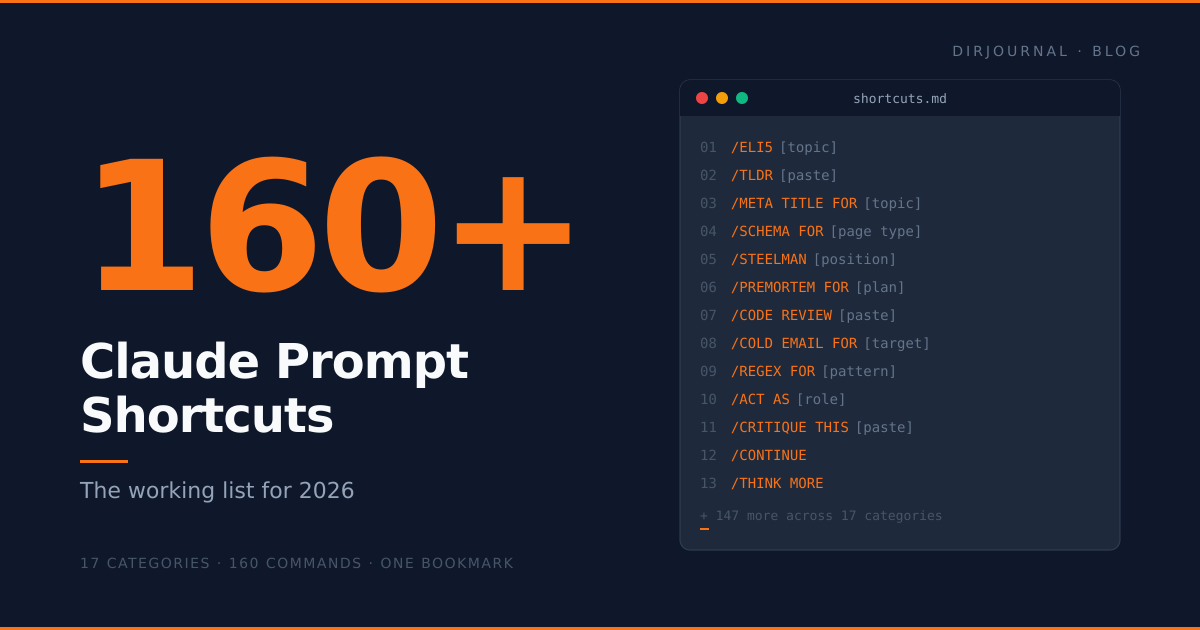
160+ Claude Prompt Shortcuts: The Working List for 2026
Most Claude prompt shortcuts you've seen target consumer use cases. Here are 160 organised by what y
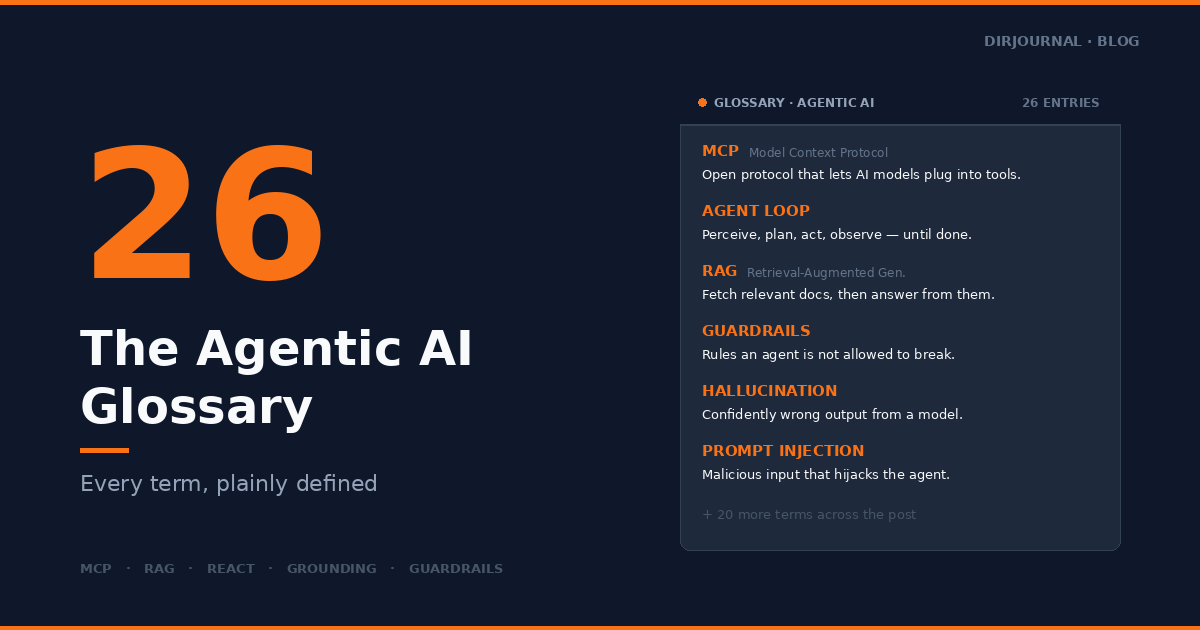
The Agentic AI Glossary: 26 Terms Every Builder Should Know in 2026
The 26 agentic AI terms I actually use day-to-day, defined plainly for builders and operators. Start
Related Resources
Looking for verified service providers? Browse our directory categories below — all human-audited and trusted by decision-makers since 2007.