Top 10 Brain Foods – Nourish Your Mind in 2026
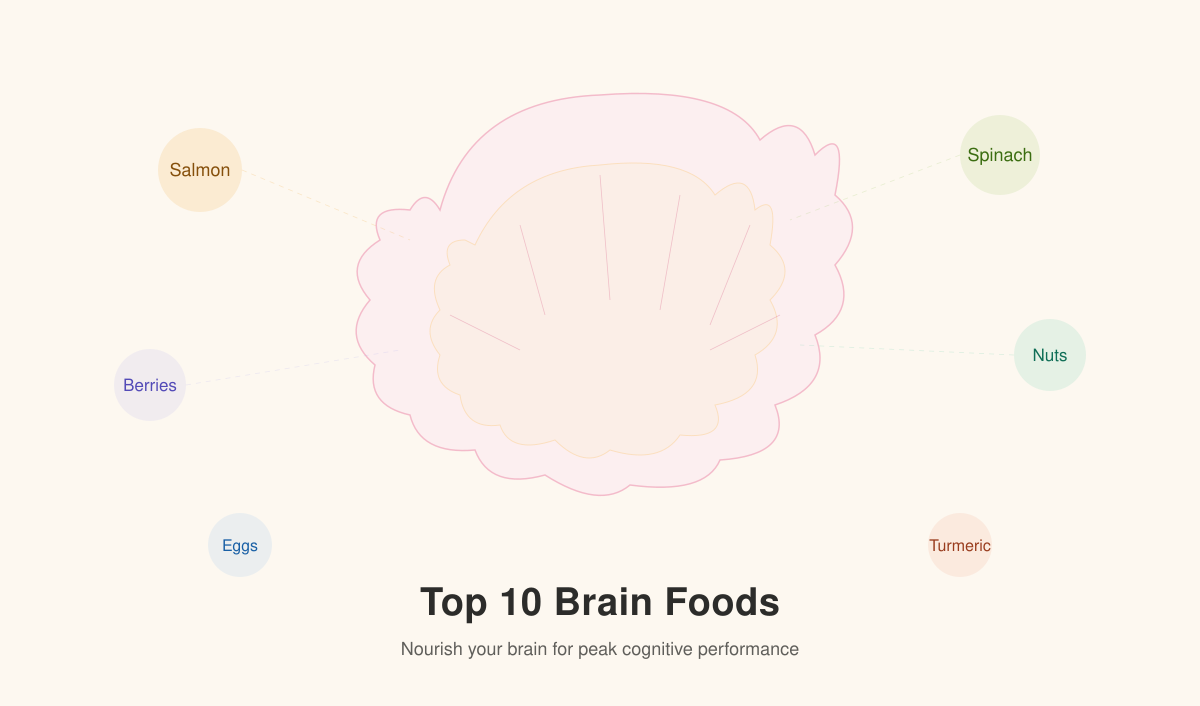
The top 10 brain foods backed by the strongest scientific evidence are: fatty fish (salmon, sardines), blueberries, dark chocolate, nuts (especially walnuts), eggs, leafy greens, avocado, pumpkin seeds, turmeric, and broccoli. These foods are rich in omega-3 fatty acids, antioxidants, choline, vitamin K, and flavonoids — nutrients with the strongest research support for memory, focus, and cognitive longevity.
Top 10 Brain Foods — Nourish Your Mind in 2026
Want to keep your mind sharp and nourished? Here are 10 highly effective brain foods that improve memory, mood, concentration, and overall clarity of thought. The nutrients they contain can boost both your well-being and productivity. The science behind these choices has only grown stronger since this post was first written — several large-scale longitudinal studies published since 2020 have confirmed the link between dietary patterns and cognitive ageing.
Read also: How to Keep Your Brain Sharp At Any Age
Fatty fish — salmon, sardines, mackerel, herring, and trout — are the most concentrated dietary sources of omega-3 fatty acids, particularly DHA (docosahexaenoic acid). DHA makes up approximately 25% of the total fat in the brain and around 90% of the omega-3 fat found in brain tissue. It is structurally essential for neuron membrane fluidity — the physical property that allows brain cells to communicate effectively. Studies consistently show that higher blood levels of DHA correlate with better memory, reduced dementia risk, and slower cognitive decline in older adults. The NHS and American Heart Association recommend at least two portions of fatty fish per week.
Blueberries contain some of the highest concentrations of antioxidants of any food, particularly anthocyanins — the pigments that give them their deep blue colour. Anthocyanins cross the blood-brain barrier and accumulate in brain regions associated with learning and memory. A landmark study from Tufts University found that rats fed blueberry extract showed improved short-term memory and motor skills. Human studies have shown that regular blueberry consumption improves working memory in older adults and reduces biomarkers associated with Alzheimer's disease. Fresh, frozen, and dried blueberries all retain significant anthocyanin content.
Dark chocolate (70%+ cocoa) contains flavonoids, caffeine, and theobromine — a combination that increases blood flow to the brain, enhances concentration, and improves mood. The cocoa flavonoids in dark chocolate accumulate in the hippocampus (the brain's primary memory centre) and have been shown in multiple studies to improve memory function and slow age-related cognitive decline. A 2023 study published in Scientific Reports found that regular dark chocolate consumers showed significantly better verbal memory performance than non-consumers. Choose 70%+ cocoa — the flavonoid content drops sharply in milk chocolate.
Nuts — particularly walnuts — are exceptionally good for brain health. Walnuts are the only nut with significant alpha-linolenic acid (ALA), the plant-based omega-3 that the body can partially convert to DHA. They also contain vitamin E, folate, melatonin, and polyphenols. A UCLA study found that adults who ate more walnuts performed significantly better on cognitive function tests, with the effect most pronounced in younger adults. The walnut's physical appearance — eerily similar to a brain — is either a coincidence or nature's most efficient labelling system.
Eggs are one of the best dietary sources of choline — a nutrient most people don't get enough of. Choline is a precursor to acetylcholine, a neurotransmitter essential for memory and muscle control. The brain requires choline throughout life, but it is particularly critical during foetal development (which is why pregnant women are advised to increase choline intake). Eggs also contain lutein and zeaxanthin, which protect against age-related cognitive decline and macular degeneration. The yolk contains virtually all the choline — it is the most nutritionally valuable part of the egg.
Spinach, kale, collard greens, and Swiss chard are exceptionally rich in vitamin K, lutein, folate, and beta-carotene — all nutrients associated with slower cognitive decline. A Rush University study tracking 960 older adults over five years found that those eating one to two servings of leafy greens daily had cognitive abilities equivalent to people 11 years younger. Vitamin K specifically supports the synthesis of sphingolipids — fats densely packed in brain cells that are critical for structural integrity. Getting adequate leafy greens is one of the most evidence-backed dietary interventions for cognitive longevity.
Avocados are rich in monounsaturated fats — the same heart-healthy fats found in olive oil — which support healthy blood flow to the brain. They also contain significant vitamin K and folate, both associated with cognitive protection, and are one of the few fruits with meaningful lutein content. Research from Tufts University found that older adults who ate one avocado daily for six months showed measurable improvements in cognitive function, specifically in working memory and problem-solving tasks. Avocado also contains more potassium per gram than bananas, supporting healthy blood pressure — which is itself a significant factor in brain health.
Pumpkin seeds are one of the most nutrient-dense foods available, particularly for brain health. They are an exceptional source of zinc (critical for nerve signalling and memory), magnesium (essential for learning and nervous system function), iron (brain fog is one of the first symptoms of iron deficiency), and copper (which helps control nerve signals). A small handful of pumpkin seeds provides a significant portion of the daily recommended intake for all four of these minerals simultaneously — making them arguably the most efficient brain-targeted snack available.
Turmeric's active compound — curcumin — has been studied extensively for its anti-inflammatory and antioxidant properties. It crosses the blood-brain barrier and has been shown in animal studies to increase brain-derived neurotrophic factor (BDNF) — a protein that promotes the growth of new neurons and supports existing brain cells. Human studies are more mixed due to curcumin's poor bioavailability (it is poorly absorbed on its own — combining it with black pepper increases absorption by up to 2,000%). A 2018 UCLA study found that curcumin supplementation improved memory and attention in non-demented adults over 18 months. Golden milk and turmeric-spiced foods are the most accessible dietary delivery mechanisms.
Broccoli is one of the most nutrient-dense vegetables for brain health, combining vitamin K (supporting cognitive function and nerve health), vitamin C (an antioxidant that protects brain cells from free radical damage), choline (supporting memory), and sulforaphane — a compound that activates the brain's own antioxidant defence system. Research suggests sulforaphane may help protect neurons after brain injury and has shown promise in early studies on Alzheimer's prevention. Broccoli is also high in fibre, which supports gut health — and the gut-brain axis increasingly recognised as relevant to cognitive and emotional wellbeing.
The MIND Diet. Developed at Rush University in 2015 and validated in multiple subsequent studies, the MIND diet (Mediterranean-DASH Intervention for Neurodegenerative Delay) combines elements of the Mediterranean and DASH diets into a brain-specific eating pattern. It emphasises leafy greens (6+ servings/week), other vegetables, berries, nuts, olive oil, whole grains, fish, beans, poultry, and wine in moderation — while limiting red meat, butter, cheese, pastries, and fried food. Large-scale follow-up studies have found that strict adherence to the MIND diet is associated with cognitive ability equivalent to being 7.5 years younger.
Ultra-processed food and cognitive decline. A major 2022 study published in JAMA Neurology found that each 10% increase in ultra-processed food consumption was associated with a 25% faster rate of cognitive decline in older adults. This finding has been replicated in subsequent research and represents the clearest dietary signal yet for cognitive ageing — avoiding ultra-processed foods may be as important as eating the foods above.
The gut-brain axis. An emerging area of research with strong preliminary evidence suggests that gut microbiome health significantly influences brain function, mood, and cognitive performance. Fermented foods (kefir, yogurt, kimchi, sauerkraut), prebiotic fibres, and diverse plant intake support gut microbiome diversity — which in turn supports the production of neurotransmitters including serotonin (approximately 95% of which is produced in the gut, not the brain).
Yes, with an important caveat: the benefits apply to dark chocolate with 70%+ cocoa content. Milk chocolate has significantly lower flavonoid content and much higher sugar. Studies show dark chocolate improves blood flow to the brain, enhances short-term memory, and provides mood-boosting effects through theobromine and phenylethylamine. One to two squares of high-quality dark chocolate daily is a reasonable evidence-backed inclusion.
Research most consistently links the following to cognitive decline: ultra-processed foods (chips, packaged snacks, fast food), refined sugar and high-fructose corn syrup, trans fats (partially hydrogenated oils), excessive alcohol, and a diet low in vegetables and omega-3s. A 2022 JAMA Neurology study found that high ultra-processed food consumption was independently associated with 25% faster cognitive decline in older adults.
Frequently Asked Questions
What foods improve memory and concentration?
Is dark chocolate actually good for your brain?
What foods are bad for brain health?
Related Resources
Looking for verified service providers? Browse our directory categories below — all human-audited and trusted by decision-makers since 2007.