Independent. Human-Curated. Established 2007.
Local Search is Dead and Local Discovery is Taking Over
DirJournal Founder · 19+ years building directory and discovery products. Editorial-team verified.
The old formula of Citations + Reviews + Proximity = Rankings is breaking. AI agents now select one business instead of listing ten. Local success in 2026 depends on live data, machine-readable schema, and verified entity nodes — not keyword stuffing and blue links.
The Formula That Worked for Twenty Years is Breaking
Citations plus reviews plus proximity equals rankings. That was the deal. You got your NAP consistent, collected some Google reviews, and showed up in the local pack. It worked from roughly 2010 until sometime in 2024.
It doesn't work the same way anymore, and the reason is simple: people are stopping asking Google for a list. They're asking an AI agent for a decision. "Find a dentist who takes my insurance and has an opening today" is not a search query — it's a command. The response isn't ten blue links. It's one recommendation and a booking button.
That shift — from search to selection — changes everything about what it means to be "found" locally.
What AI Agents Actually Do When Someone Asks for a Plumber
When a voice assistant or an AI search tool receives a local intent query, it doesn't crawl for keywords. It orchestrates. It pulls from structured data, checks live availability via APIs, cross-references reviews for recency, and verifies the business exists across multiple authoritative nodes. Then it picks one.
The old model rewarded visibility. The new model rewards resolution — can the agent complete the task (book the appointment, schedule the service call) without sending the user to a website at all?
What This Means for Three Types of Local Businesses By Industry
If an AI agent can't check whether you have a slot open on Thursday, it won't recommend you. Schema markup with ReserveAction and a real booking endpoint is no longer optional. The agent needs to resolve the query — not just display your phone number.
A static "we serve the greater Houston area" page doesn't help an agent that needs to know if you'll come to a specific zip code right now. GeoJSON service boundaries and live availability are what get you selected over a competitor the agent can actually work with.
AI agents are starting to cross-reference state bar databases. If your bar number isn't in your structured data, you're already behind every competitor whose is. Your NPI (doctors/dentists) or bar number in JSON-LD acts as hard verification that immediately elevates trust.
The Confidence Score That Replaced Rankings
AI agents don't rank businesses — they assign confidence. The confidence score is a synthesis of several signals that traditional SEO never had to worry about:
Data consistency across nodes. If your phone number on Google matches your website matches your directory listing matches your state filing, that's high confidence. If any of those disagree, the score drops — hard.
Review recency, not just volume. Five hundred reviews from 2021 lose to twenty reviews from this month. Agents measure what one researcher calls "sentiment velocity" — the rate at which fresh social proof is being generated.
Machine readability. A beautiful website that renders as an empty div to a bot scores zero. This is the single biggest gap I see in local businesses right now: their sites look great to humans and invisible to agents.
Three Ways to Force Agent Discovery
Get on a podcast. Google and Apple AI agents use podcast transcriptions as expert signals. A local lawyer who appears on a regional news podcast or a legal-tech show creates what amounts to an audio entity node. When an agent needs to cite expertise, that transcript is evidence. It's not a backlink play — it's a credibility play.
Embed your license number in JSON-LD. Google's health and legal filters now cross-reference state licensing boards. Your NPI or bar number in your website's structured data acts as a hard verification that immediately elevates you above every unverified competitor. Most local businesses still don't do this.
Get listed on niche authority hubs that have been around for years. Generic directories are worthless, but established, human-curated platforms with long histories carry disproportionate weight. AI agents use these to confirm that a business isn't a ghost entity that was spun up last week. A listing on a 19-year-old industry registry is worth more to an agent than a hundred automated citations.
The Schema That Makes You Bookable
If you take nothing else from this article, implement this: your structured data needs to answer the questions an AI agent is actually asking. Not "what keywords do you rank for" but "can I book this business right now?"
A 2026-standard LocalBusiness payload includes a potentialAction of type ReserveAction with an EntryPoint that actually resolves to a booking page. It includes areaServed with GeoCircle coordinates. It includes sameAs links to every authoritative node where your business exists — state filings, professional profiles, directory listings.
Without this, you're invisible to the thing that's replacing Google's ten blue links.
Your Local Discovery Action Checklist
potentialAction with ReserveAction to your LocalBusiness schemaJoin the DirJournal newsletter
Weekly insights on directories, listings, SEO, and how businesses get found online.
No spam. Unsubscribe anytime.
Found this useful?
Share this article
Recommended for You
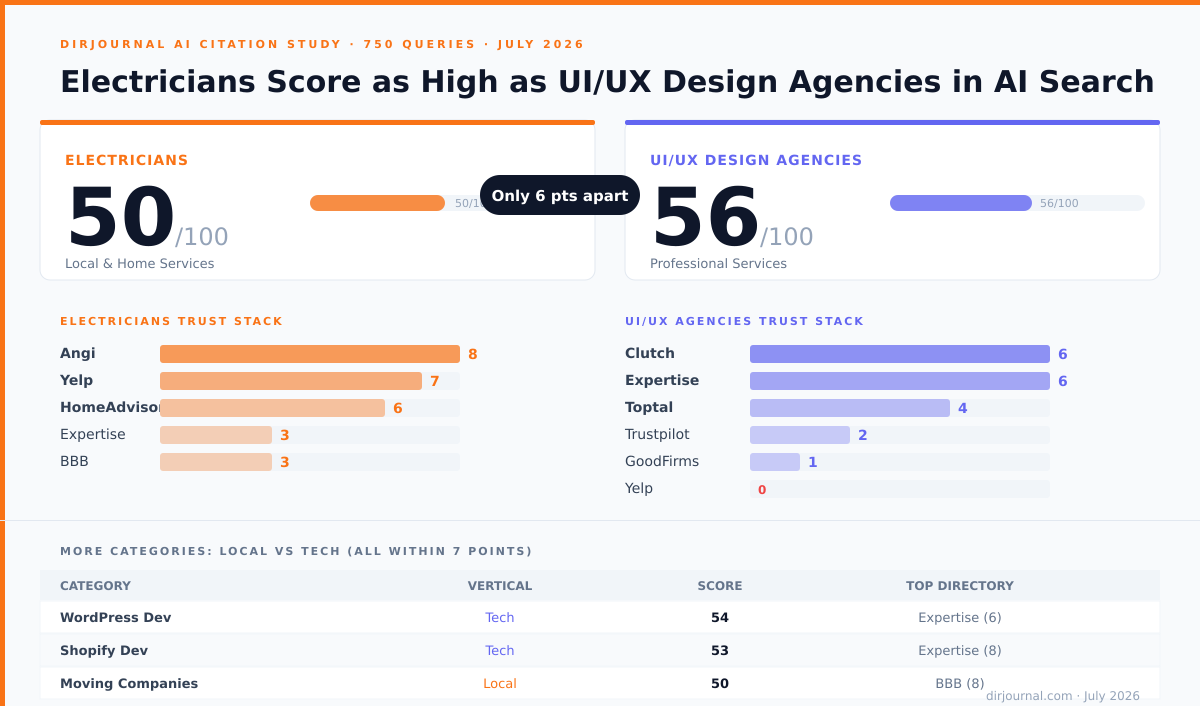
Electricians Score as High as UI/UX Design Agencies in AI Search. Here's Why.
Electricians scored 50/100 in our AI Citation Study. UI/UX Design Agencies scored 56. Six points…
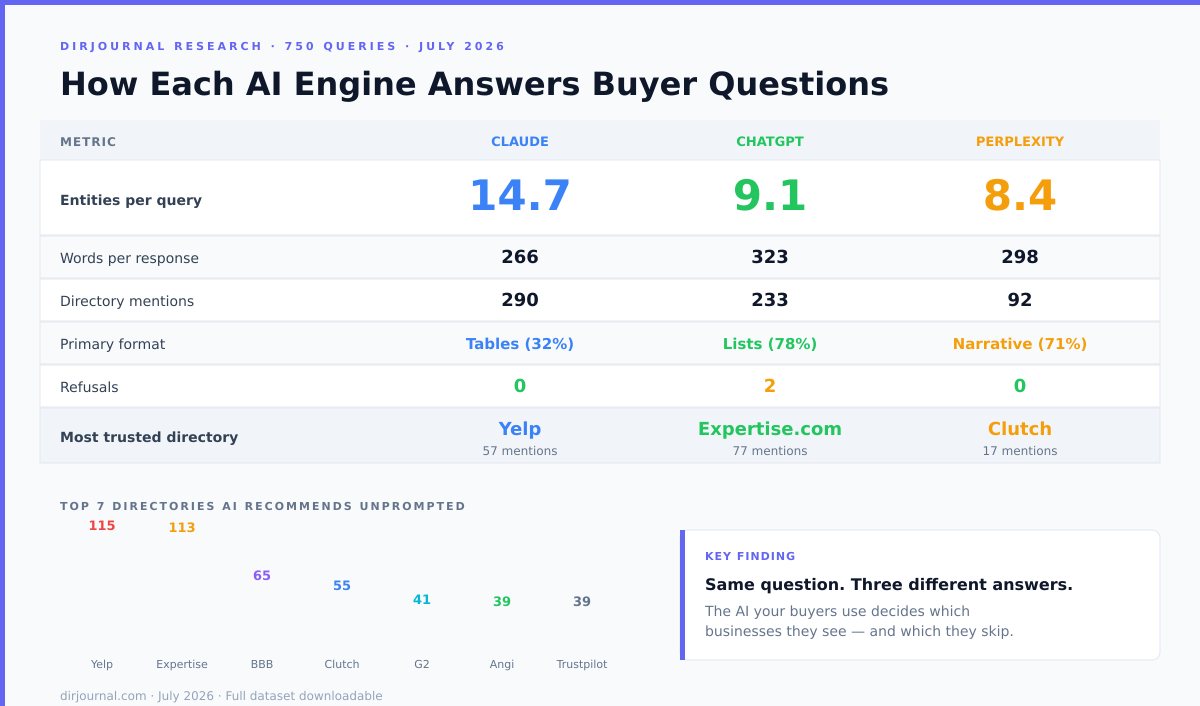
Claude vs ChatGPT vs Perplexity: How Each AI Engine Answers Buyer Questions Differently
Claude writes comparison tables and names 14.7 businesses per query. ChatGPT writes numbered lists…
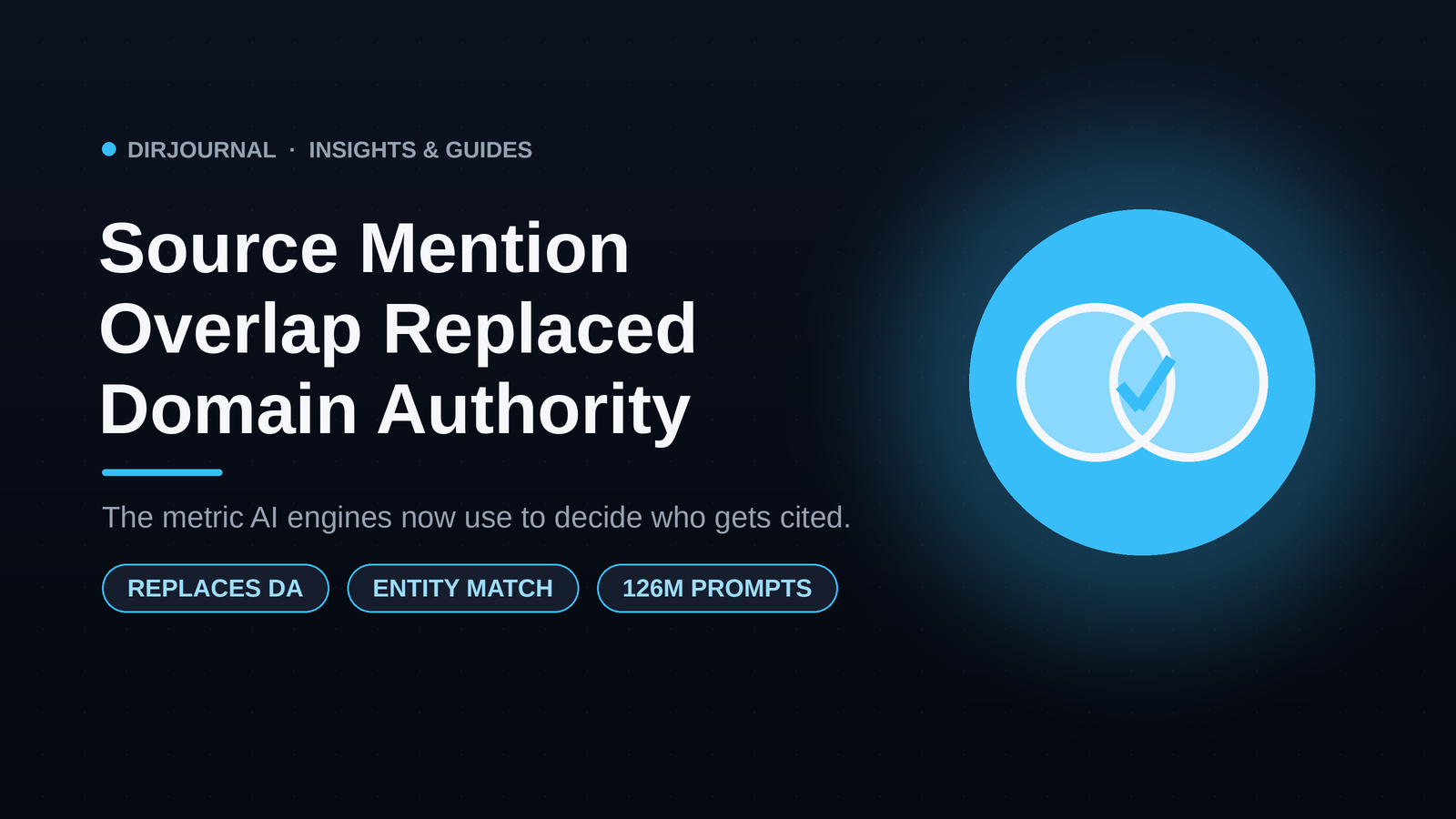
Why Source Mention Overlap Replaced Domain Authority in AI Search
Source Mention Overlap has replaced Domain Authority as the metric AI engines use to decide which…
Deep Dive Resources
Related topics consolidated into this guide:
- The Best Business Directories for SEO in 2026
Related Resources
Looking for verified service providers? Browse our directory categories below — all human-audited and trusted by decision-makers since 2007.