Independent. Human-Curated. Established 2007.
Are Links Dead? Our 2021 Verdict + What's Changed in 2026
DirJournal Contributing Author. Editorial-team verified.
Key Topics in This Guide
- 1What We Said in 2021 (Still Holds Up) — covered in detail below
- 2The Original 2021 Infographic — covered in detail below
- 3What Changed Since 2021 — covered in detail below
- 41. AI Overviews Entered the SERP and Started Intercepting Clicks Before Users See Any Link — covered in detail below
- 52. Brand Mentions Now Beat Backlinks 3:1 for AI Visibility — covered in detail below
- 63. Most Link-Building Tactics From the 2010-2021 Era Are Now Actively Harmful — covered in detail below
- 7Links for Google vs. Links for AI — covered in detail below
- 8The New Hierarchy of Off-Site Signals — covered in detail below
- 9Link-Building Tactics That Are Actually Dead in 2026 — covered in detail below
- 10What Actually Works in 2026 — covered in detail below
- 11What Stays the Same — covered in detail below
- 12Frequently Asked Questions — covered in detail below
Back in late 2020, we published an infographic answering a question that gets asked roughly once a year, every year, since around 2010: are links dead?
Our answer then was no. Five years later, the answer is still no. The original infographic from that piece is preserved below, and most of what it said still holds — Google's top organic result still has more referring domains than results further down the page, the link schemes Google penalized then still get penalized now, and the principle that hard-to-get links are worth more than easy-to-get ones is as true today as when Paddy Moogan first said it.
What has changed is the surrounding context. Specifically: a new ranking surface called AI Overviews, and a separate optimization target called LLM citations, have appeared since the original piece ran. On those surfaces, brand mentions now correlate with visibility three times more strongly than backlinks do.
Links aren't dead. They just got demoted.
This is the 2026 update to our 2021 verdict.
What We Said in 2021 (Still Holds Up)
The original infographic — embedded in full below — made the following claims, all of which remain accurate in 2026:
An overwhelming majority of websites have zero external backlinks. The "94% of all web content has no external backlinks" stat from the original infographic is still roughly accurate. Most of the open web is effectively orphaned from a link perspective.
Quality of links beats quantity. Always has. Always will.
Anchor text matters, but exact-match keyword stuffing in anchor text gets penalized. The over-optimization penalty hasn't softened.
The follow vs. nofollow distinction is still real, though Google's 2019 reclassification of nofollow as a "hint" rather than a "directive" means nofollow links can still pass some weight in practice.
Body links carry more weight than footer or sidebar links. Click-likelihood is a signal.
Domain trust, link diversity, and topical relevance are the three pillars of a good link profile.
Rodney Brazil left a comment on the original article in December 2020 that captured the right read in one sentence: "The emphasis should be on trust, diversity, and relevance. If the link doesn't truly help the user, it won't help your page ranking, either."
That comment is more correct in 2026 than it was when he wrote it. Trust, diversity, and relevance describe almost exactly what AI systems are now looking for when deciding which brands to cite. The infographic was directionally right. The commenter was even more right.
The Original 2021 Infographic

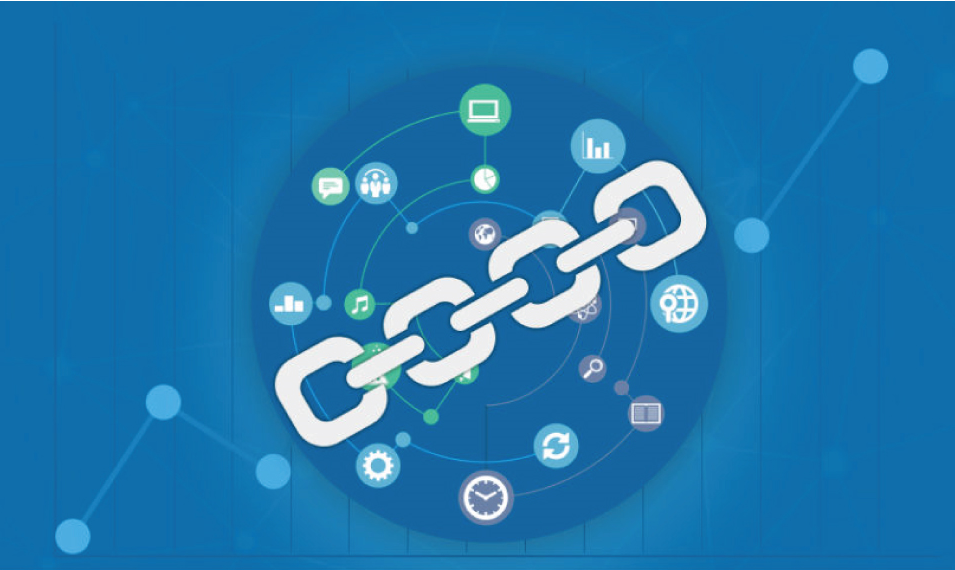
The infographic covers what mattered for link quality at the time: anchor text, URL factors, clickability, follow vs. nofollow, page placement, technical factors (Core Web Vitals, AMP, E-A-T), and how to build a better link profile through trust, diversity, and relevance.
Most of it still applies. The parts that need updating are below.
What Changed Since 2021
Three things, in order of importance.
1. AI Overviews Entered the SERP and Started Intercepting Clicks Before Users See Any Link
When Google rolled out AI Overviews broadly in May 2024, the click economy that had supported the open web since the mid-2000s started cracking. A December 2025 Ahrefs analysis of 300,000 keywords found that pages ranking #1 on queries with an AI Overview get 58% fewer clicks than equivalent queries without one. SparkToro's 2024 clickstream analysis with Datos found that of every 1,000 US Google searches, only 360 now produce a click to the open web. The rest end on Google itself.
This matters for link strategy because the math of "earn a link, drive a ranking, capture the traffic" now leaks at the last step. You can still earn the link. You can still drive the ranking. But the traffic the ranking used to produce is increasingly being captured by Google's AI summary above your result.
2. Brand Mentions Now Beat Backlinks 3:1 for AI Visibility
This is the single most important data point for anyone who built a link strategy before 2024. In May 2025, Ahrefs analyzed 75,000 brands to measure which signals correlate with appearing in AI Overviews. The results inverted the link-centric thinking that has dominated SEO for the last two decades.
The strongest correlations with AI Overview brand visibility:
Branded web mentions: 0.664
Branded anchors: 0.527
Branded search volume: 0.392
Backlinks: 0.218
Brand mentions outperformed backlinks by roughly 3:1. A separate Muck Rack analysis of over one million AI-cited links found that 82% of citations come from earned media — third-party editorial coverage from credible publications, not owned content or paid placements. A Yext analysis of 6.8 million AI citations across ChatGPT, Gemini, and Perplexity found that 86% of citations come from brand-controlled sources like websites and listings.
The signal AI systems follow isn't the link graph. It's the brand graph. If you appear consistently across credible sources in your category — linked or unlinked — AI systems learn to trust your brand. If you only show up on your own site with a lot of inbound links and minimal external mentions, you get less weight than you used to.
3. Most Link-Building Tactics From the 2010-2021 Era Are Now Actively Harmful
This is the change operators are slowest to accept. The tactics that produced links in volume from 2010 through 2021 — guest post networks, private blog network buys, expired domain redirects, link exchanges, mass directory submissions, comment links, widget-embedded links, niche-edit purchases — are variously dead, deindexed, or actively penalized by Google's link spam updates from December 2022 onward.
The December 2022 link spam update specifically used Google's SpamBrain AI system to detect unnatural link patterns at scale. The March 2024 core update and subsequent spam updates extended that capability. A link-building budget spent on any of those tactics in 2026 is worse than wasted. It's actively hurting the site.
Links for Google vs. Links for AI
These are now two separate optimization targets, and the same activity rarely produces equal value on both.
For Google's traditional blue-link rankings, backlinks still matter. The May 2024 Google leaks confirmed what experienced SEOs had assumed — PageRank-style signals are still in active use, and link-based authority still influences rankings. A site with strong referring domains in its niche still has an advantage over one without.
For AI Overview citations, ChatGPT mentions, Perplexity references, and Gemini answers, the priority order is different. The systems are looking for brand co-occurrence across credible sources, structured content they can extract cleanly, schema markup that identifies entities, and consistency of brand positioning across the web. Links are part of that picture. They are no longer the dominant signal.
Strategically, this means a 2026 link program should produce both — a placement that earns a link AND an unlinked brand mention from the same activity. A guest post that only gets you a backlink in the author bio is now worth half what it used to be. A feature in a trade publication that mentions your brand by name four times and links once is worth more than four guest posts on lower-tier sites.
The New Hierarchy of Off-Site Signals
Order of importance for AI visibility, based on the 2025-2026 research:
Brand web mentions. Being talked about by name across credible publications, podcasts, forums, and trade media. Linked or unlinked. The volume and contextual quality of mentions is the strongest signal we have data on.
Branded anchor text. When you do get links, your brand name appearing in or near the anchor signals to AI systems that the link is editorial and intentional.
Branded search volume. When people search for your brand name directly, that's a downstream signal of category recognition. Building searchable brand awareness now feeds AI visibility.
Co-occurrence with category entities. Your brand appearing in contexts that also mention your category, your competitors, and your relevant tools or standards. This builds entity association inside the AI systems.
Backlinks from topically relevant, high-authority sources. Still matter, but with topical relevance now weighted more heavily than raw authority. A DR 30 niche blog can outweigh a DR 90 generalist site for the right query.
Backlinks generally. Still a positive signal. Still help with rankings. No longer the headline.
Link-Building Tactics That Are Actually Dead in 2026
Tactics still in the wild that should be retired immediately:
Guest post networks. Sites built to publish guest posts in exchange for a fee. Google's spam updates target these specifically. The detection is now very good.
Bulk directory submissions. General-purpose auto-approve directories with no editorial standards. This is distinct from credible, human-curated industry directories — those still pass value. The distinction is editorial quality, not the directory format itself.
Comment links. Even on nofollow, mass comment links are pattern-matched and discounted. The effort-to-value ratio is now extremely poor.
Niche-edit purchases. Paying to insert a link into an existing article on someone else's site. Often combined with PBN sites or low-quality publishers. The link spam updates flag these.
Article syndication for SEO. Publishing the same article on multiple sites for multiple backlinks. Duplicate content patterns plus low-quality publisher signals sink this.
Widget-embedded links. Putting a useful widget on third-party sites with an embedded backlink. Flagged in Google's webmaster guidelines since 2014 and now more aggressively detected.
Forum profile links. Creating forum accounts purely to insert a profile link. Detection here is essentially solved.
PBN buys. Paying for placements on private blog networks built specifically to pass link equity. The risk-to-reward ratio is now wildly negative.
What Actually Works in 2026
The activities that produce links AND mentions AND citation worthiness, in roughly increasing order of effort:
Original research and proprietary data. Publish a study with your own data — survey results, industry benchmarks, customer behavior data. Journalists, analysts, and content creators need data points and they will link to and mention the source. The same study earns brand mentions when writers reference the numbers without linking. AI systems pick up on the brand-data association.
Free tools that solve a real problem. A calculator, a checker, a generator, a template. People link to tools because they're useful. They mention tools by name when explaining workflows. They search for the tool by name, which builds branded search volume.
Expert commentary in trade publications. Be the source quoted in articles about your industry. HARO and Connectively-style platforms, journalist outreach, and just being available when reporters need a quote. Each quote is a brand mention. Many are also links.
Podcast appearances. The host introduces you. Mentions your company name multiple times. The show notes link to you. Mention volume, brand association, and a link, all in one placement.
Conference speaking. Industry conferences mention speakers by name and company across their site, social channels, and follow-up content. Multiple mentions and multiple links, all editorial, all from a single appearance.
Long-form, structured content that actually answers questions. Pillar content with clear schema markup, FAQ sections, and citable passages. AI systems extract from it. Other writers reference it. Both produce visibility.
Strategic partnerships and integrations. When you integrate with another product or co-publish something with a partner, both sides write about it. Mutual brand mentions across both audiences.
What Stays the Same
Being explicit about what hasn't changed:
Editorial links from credible publications are still the gold standard. They were in 2010. They were in 2021. They still are.
Topical relevance still matters more than raw authority for ranking purposes. A relevant link from a niche site beats an unrelated link from a high-authority site.
Brand-building offline still translates to brand-building online. Conferences, partnerships, real PR, and the unglamorous work of building category recognition still produce returns.
The harder a link is to get, the more it's worth. Paddy Moogan said it in The Linkbuilding Book and we quoted it in the 2021 infographic. Still true.
If your link strategy in 2026 is doing the things that actually earn editorial coverage — original research, useful tools, expert commentary, real partnerships — you don't need to overhaul much. What you need to add is awareness that mentions matter as much as links now, and that AI systems are tracking both.
Frequently Asked Questions
Are backlinks still a Google ranking factor in 2026? Yes. Backlinks remain a confirmed ranking factor for Google's traditional blue-link results. The May 2024 Google leaks indicated that PageRank-style link signals are still in active use. However, the relative weight of backlinks compared to other signals — particularly brand and topical authority signals — has decreased over time.
Do brand mentions help SEO if they do not link to my site? Yes, especially for AI search visibility. Ahrefs' analysis of 75,000 brands found that branded web mentions correlate with AI Overview visibility at 0.664 — three times stronger than backlinks at 0.218. For traditional Google rankings, the case is less direct but still meaningful. Brand mentions contribute to entity recognition and topical authority signals.
Is link building dead in 2026? No, but most link-building tactics from the 2010-2021 era are dead. Guest post networks, PBNs, directory spam, comment links, and similar tactics are now detected and discounted or penalized. Link building today means digital PR — earning editorial coverage through original research, expert commentary, useful tools, and genuine partnerships.
Are directory links worth anything in 2026? Credible, human-curated industry directories still pass value and contribute to brand entity signals. General-purpose, auto-approve directory submissions are essentially worthless and may be flagged as part of a link spam pattern. The distinction is editorial standards, not the directory format itself.
Should I buy backlinks? No. Paid links violate Google's webmaster guidelines, the detection has gotten significantly more sophisticated through the SpamBrain system, and the downside risk of a manual action or algorithmic demotion now outweighs any short-term upside.
How do I get my brand cited in AI Overviews and ChatGPT? Build consistent presence across credible third-party sources in your category. Earn editorial coverage that mentions your brand by name. Implement entity-clarifying schema markup on your own site. Make sure your brand description, positioning, and category claims are consistent across every surface you control. The AI systems are looking for category-brand association across multiple credible sources, not for individual high-authority backlinks.
The 2026 Verdict
Links aren't dead. The 2021 infographic was right then, and most of it is still right now. What changed is the rest of the picture.
For Google's traditional rankings, links still matter. They will likely still matter five years from now. The link economy survived Penguin, Panda, the Medic update, the Helpful Content update, and every "links are dead" think piece since 2010. It will survive AI Overviews too.
For AI search visibility — Overviews, ChatGPT citations, Perplexity references, Gemini answers — the dominant signal is now brand mentions, not links. Operators who keep running their 2021 link playbook will find their AI visibility lagging competitors who have shifted spending toward digital PR, original research, and category brand-building.
Both surfaces matter. Neither has fully replaced the other. The strategy that wins both is the one that earns editorial coverage from credible sources in your category — coverage that produces brand mentions, citation-worthy quotes, AND occasional links, all from the same activity.
Bibi Lauri Raven said it in our 2021 infographic and it holds up: "No website is an island. As long as interconnected networks form the Internet, links matter."
Five years later, the interconnected networks are bigger, the link is just one signal among many, and the brand association built across them matters as much as any individual hyperlink ever did.
The question was never really "are links dead?" in 2010, in 2021, or in 2026. The real question has always been: are you earning the kind of attention that credible sources naturally cite? If the answer is yes, you're fine. The mechanism of that citation — a link, a mention, an AI Overview reference — is just the form it takes.
Earn the attention. The links follow. The mentions follow. The AI visibility follows.
That part hasn't changed since the first time someone asked the question.
Frequently Asked Questions
Are backlinks still a Google ranking factor in 2026?
Do brand mentions help SEO if they do not link to my site?
Is link building dead in 2026?
Are directory links worth anything in 2026?
Should I buy backlinks?
How do I get my brand cited in AI Overviews and ChatGPT?
Join the DirJournal newsletter
Weekly insights on directories, listings, SEO, and how businesses get found online.
No spam. Unsubscribe anytime.
Found this useful?
Share this article
Recommended for You
SEO for Web Designers: Build Sites Google and AI Can Find
AEO vs GEO vs SEO: What 750 AI Queries Actually Reveal
Answer engine optimization, GEO, LLMO, and GAIO are competing names for the same practical task.…
What Is Emotional Intelligence? The 8 Core Fundamentals (2026 Guide)
Emotional intelligence (EQ) is the ability to recognize, understand, and manage your own emotions…
Deep Dive Resources
Related topics consolidated into this guide:
- The Best Business Directories for SEO in 2026
Related Resources
Looking for verified service providers? Browse our directory categories below — all human-audited and trusted by decision-makers since 2007.