Independent. Human-Curated. Established 2007.
The Design Behind 10 of the World's Most Recognizable National Flags
DirJournal Contributing Author. Editorial-team verified.
Updated September 2026 — refreshed with current data and fact-checked. Now covers 10 flags (up from 5).
There are roughly 230 national flags in active use. That number shifts as borders redraw and new states declare independence — South Sudan's flag, for instance, only dates to 2011. But while most people can identify a handful of flags on sight, far fewer know why those flags look the way they do.
Flag design is not decorative. It is political. Every stripe, star, crescent, and colour choice carries meaning that was argued over, sometimes for decades, before it was stitched into fabric. The following ten flags are among the most instantly recognizable on Earth. Here is what went into each of them.
Need flag images for your own project? See our guide to free stock image sites for public-domain sources including Wikimedia Commons and NASA.
| Country | Colours | Current Design Adopted | Proportions | Distinctive Feature |
|---|---|---|---|---|
| United States | Red, white, blue | 1960 | 10:19 | 50 stars, 13 stripes |
| Japan | White, red | 1999 (formally) | 2:3 | Hinomaru sun disc |
| South Africa | Black, gold, green, white, red, blue | 1994 | 2:3 | Y-shaped pall, 6 colours |
| Turkey | Red, white | 1844 | 2:3 | Crescent and star |
| United Kingdom | Red, white, blue | 1801 | 1:2 (military) | Three layered crosses |
| Brazil | Green, yellow, blue, white | 1889 | 7:10 | Celestial globe with 27 stars |
| Canada | Red, white | 1965 | 1:2 | 11-point maple leaf |
| Nepal | Red, blue, white | 1962 | ~1:1.22 | Only non-rectangular national flag |
| India | Saffron, white, green, blue | 1947 | 2:3 | 24-spoke Ashoka Chakra |
| South Korea | White, black, red, blue | 1949 | 2:3 | Taeguk and four trigrams |
1. United States of America
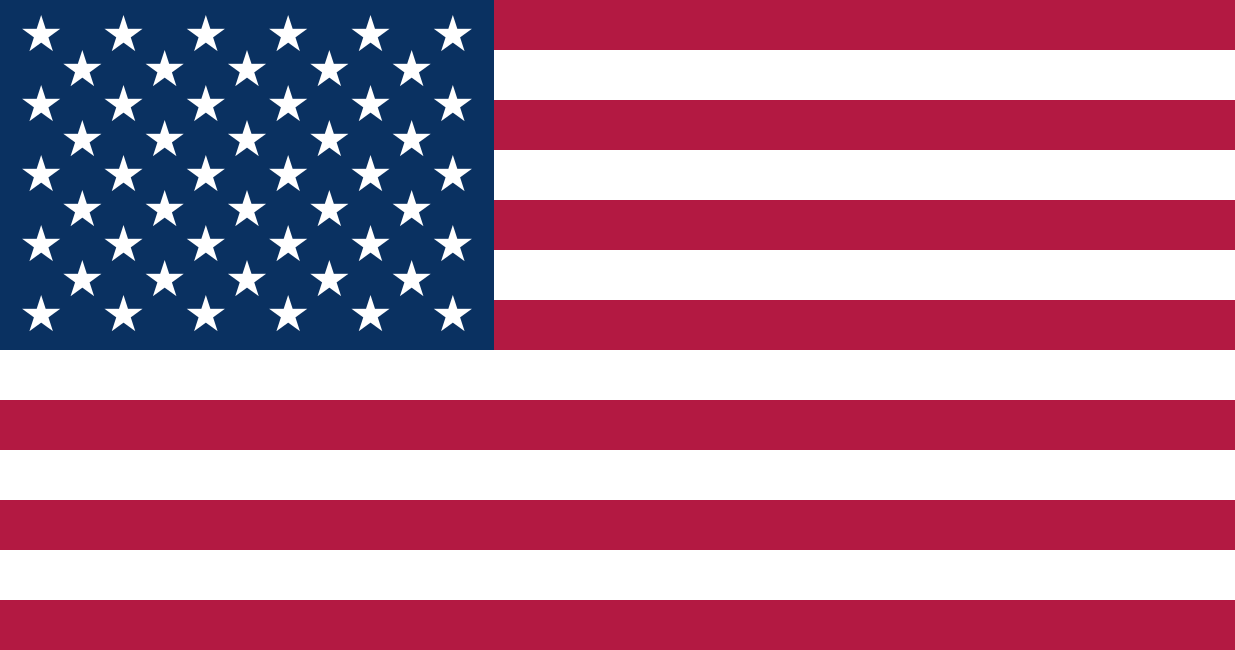
Thirteen alternating red and white stripes. Fifty white stars on a blue canton. The stripes represent the original thirteen colonies; the stars, one for each state, have been updated 27 times — most recently in 1960 when Hawaii was admitted. The flag's proportions are specified in Executive Order 10834 (1959): the hoist-to-fly ratio is 1:1.9, and the blue canton spans seven stripes in height.
Few flags have been so aggressively commercialized. The Stars and Stripes appears on everything from bikinis to pickup truck tailgates, and it remains one of the most searched-for national symbols online. In diplomatic settings, its display protocol is governed by the United States Flag Code (4 U.S.C. §§ 1–10), though the code carries no enforcement mechanism — burning the flag, famously, is protected speech under Texas v. Johnson (1989).
Browse US-based businesses in our United States directory.
2. Japan
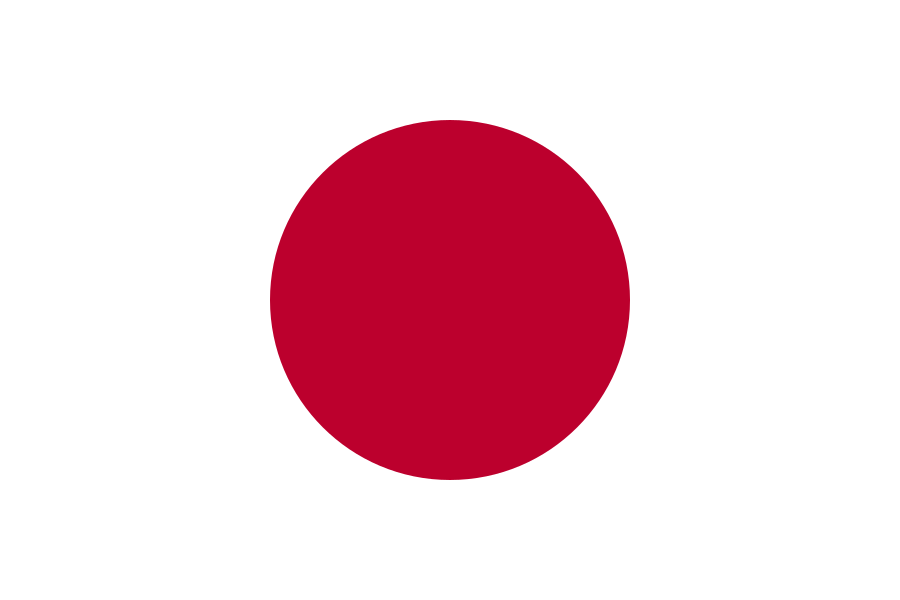
A red disc centred on a white field. That is the entire design. The disc represents the sun, and the flag is known domestically as Nisshōki (日章旗) or, more commonly, Hinomaru — "circle of the sun."
Here is the odd part: despite being one of the most iconic flags in existence, Japan did not formally designate it as the national flag until 1999, when the Act on National Flag and Anthem was passed. Variants had been in use for centuries — feudal lords flew sun-disc banners as far back as the Kamakura period — but official legal status came remarkably late. The current specification sets the disc diameter at three-fifths of the flag's height, centred precisely.
A separate design, the Rising Sun Flag with its sixteen radiating rays, remains associated with the Japan Maritime Self-Defense Force. That variant is contentious in South Korea and China, where it carries wartime connotations. The plain Hinomaru, by contrast, travels well — it is a fixture in global sports branding, tech company marketing, and minimalist design references.
3. South Africa
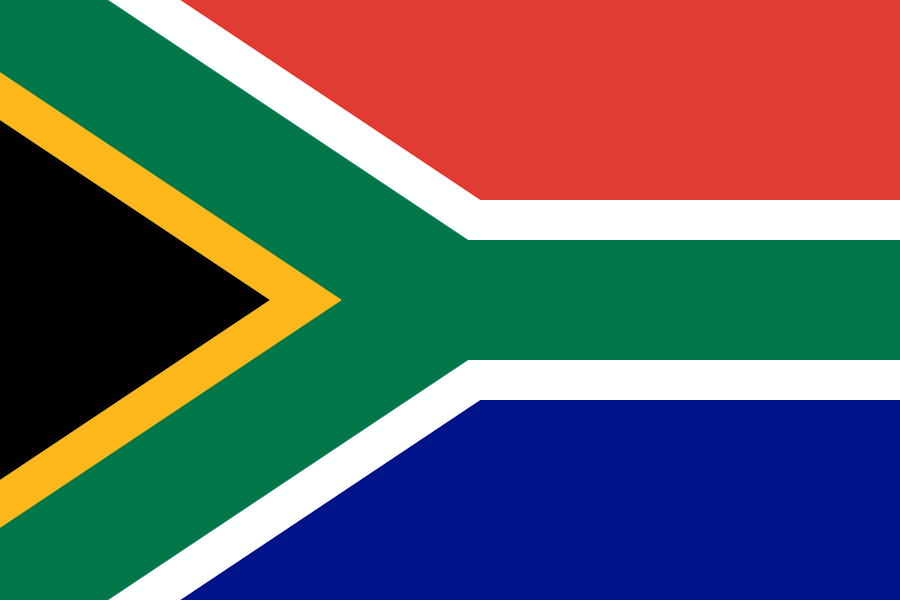
Six colours. No seal, no coat of arms, no motto. South Africa's flag, adopted on 27 April 1994 — the day of the country's first fully democratic election — is the only national flag in the world with six colours in its primary design: black, gold (officially "gold" though it reads as a deep yellow), green, white, chilli red, and blue.
The dominant feature is a horizontal Y-shape (a pall, in heraldic terms) that converges toward the hoist. The design is widely interpreted as representing the convergence of diverse cultural groups moving forward together — though the South African government has never assigned official meanings to the colours. The red and blue echo the old Dutch and British colonial flags; the black, green, and gold recall the ANC's party colours. Designer Frederick Brownell created the flag under extraordinary time pressure ahead of the 1994 inauguration, and it was originally intended as an interim design. Thirty-two years later, it has become permanent.
In modern usage, the flag is a staple of South African sports culture — particularly rugby and cricket — and its colour palette has been adopted by South African Airways and numerous local brands as a shorthand for national identity.
4. Turkey
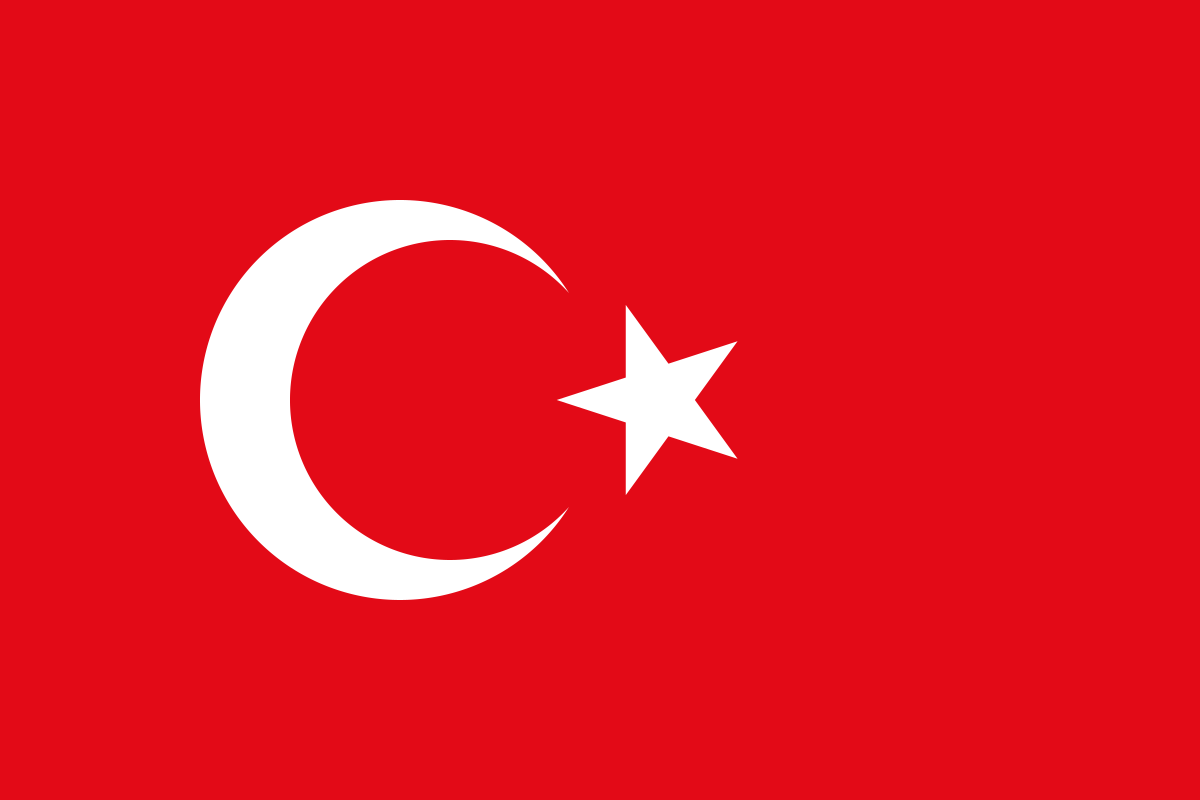
A white crescent and five-pointed star on a deep red field. The Turkish flag, called Ay Yıldız ("moon star"), has been in use since 1844, though it was officially standardized in Turkish law in 1936. Its proportions are specified precisely: the flag's width-to-length ratio is 2:3, and the crescent's outer arc and star placement are defined by geometric construction in the Turkish Flag Law (No. 2893).
The red has pre-Ottoman roots — it is associated with the Oghuz Turks, who are considered ancestral to the modern Turkish nation. The crescent and star combination predates Islam's association with those symbols; Turkic peoples used celestial imagery tied to sky worship long before the Ottoman Empire adopted the crescent as an imperial emblem.
Turks are intensely protective of their flag. Desecration is a criminal offence under Article 300 of the Turkish Penal Code, carrying prison sentences of up to three years. The flag is omnipresent — draped from apartment balconies, painted on mountainsides, and woven into football culture. It ranks among the most frequently tattooed national flags worldwide.
5. United Kingdom
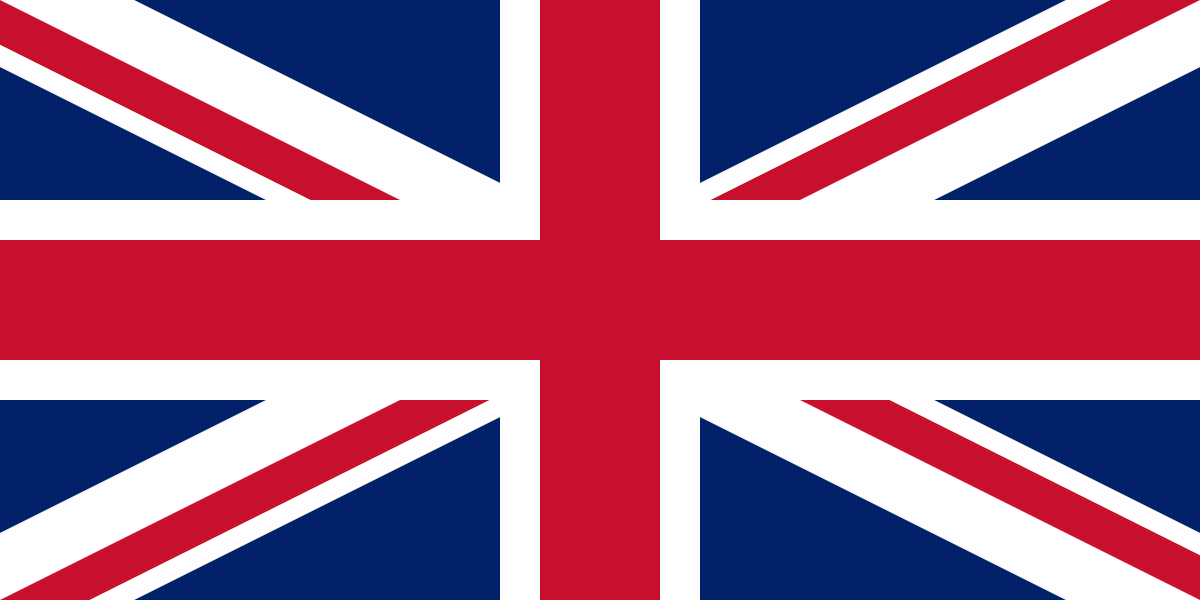
The Union Jack — or, if you are being precise, the Union Flag (it is technically only a "Jack" when flown at sea, though almost nobody observes this distinction anymore) — layers three crosses: the red cross of St George (England), the white saltire of St Andrew (Scotland), and the red saltire of St Patrick (Ireland). Wales has no representation in the design, a sore point the Welsh bring up with some regularity.
The current version dates to 1 January 1801, when the Act of Union merged Great Britain and Ireland. The flag has no official proportions specified by law — the Ministry of Defence uses 1:2 for military use, while civilian versions sometimes appear at 3:5. There is, remarkably, no statute that designates it as the national flag. Convention alone has kept it in place for over two centuries.
The Union Jack's cultural reach extends far beyond the UK. It appears on the national flags of Australia, New Zealand, Fiji, and Tuvalu (among others), and its design has been appropriated by fashion brands — most famously by Vivienne Westwood in the punk era and by countless high-street retailers since. The 2014 Scottish independence referendum raised the real possibility that the flag might have needed redesigning; the 2016 Brexit vote raised similar questions about Northern Ireland. So far, the design has survived every constitutional stress test thrown at it.
Browse UK-based businesses in our United Kingdom directory.
6. Brazil
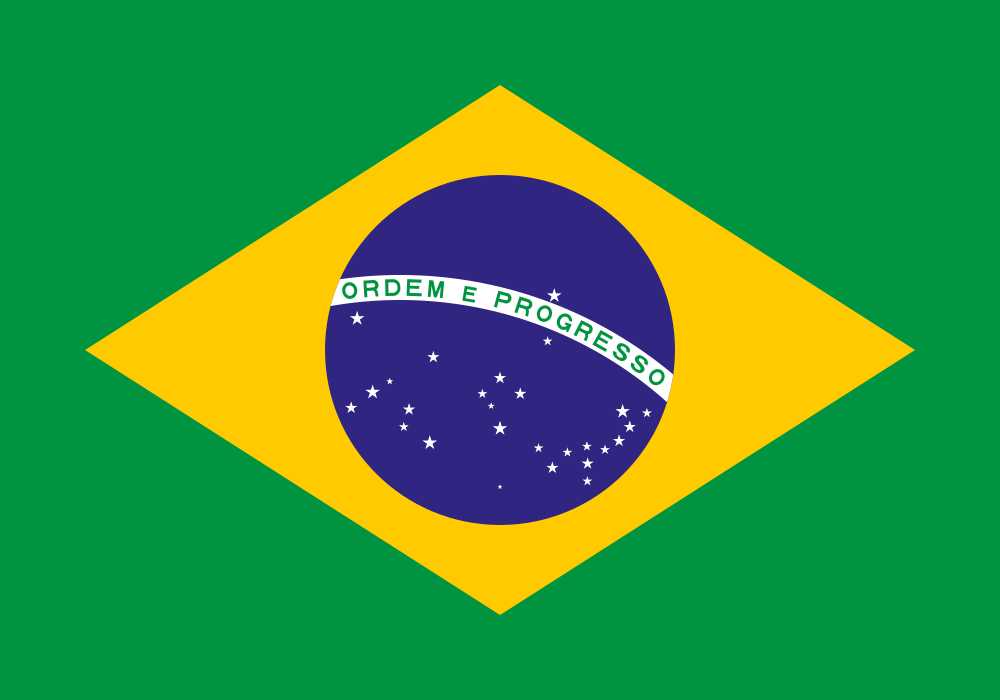
The Brazilian flag breaks every rule of "keep it simple." A green field. A yellow diamond. Inside the diamond, a dark blue globe with a curved white band reading ORDEM E PROGRESSO (Order and Progress, borrowed from Auguste Comte's positivism). And on the globe, 27 white stars arranged to depict the southern sky as seen from Rio de Janeiro at 8:30 a.m. on 15 November 1889 — the moment the Republic was proclaimed.
Each star represents a state plus the Federal District. When new states have been created, new stars have been added — most recently in 1992 when four states were carved from existing territories. The constellation positions are astronomically accurate. Spica, representing Pará, is the only star above the ORDEM E PROGRESSO band, placed there because Pará was historically above the equator.
The green and yellow predate the republic. Green represented the House of Braganza (the Portuguese royal family), yellow the House of Habsburg (Empress Leopoldina's Austrian lineage). Post-monarchy, the colours were reinterpreted as representing Brazil's forests and mineral wealth. The flag's proportions are 7:10.
7. Canada
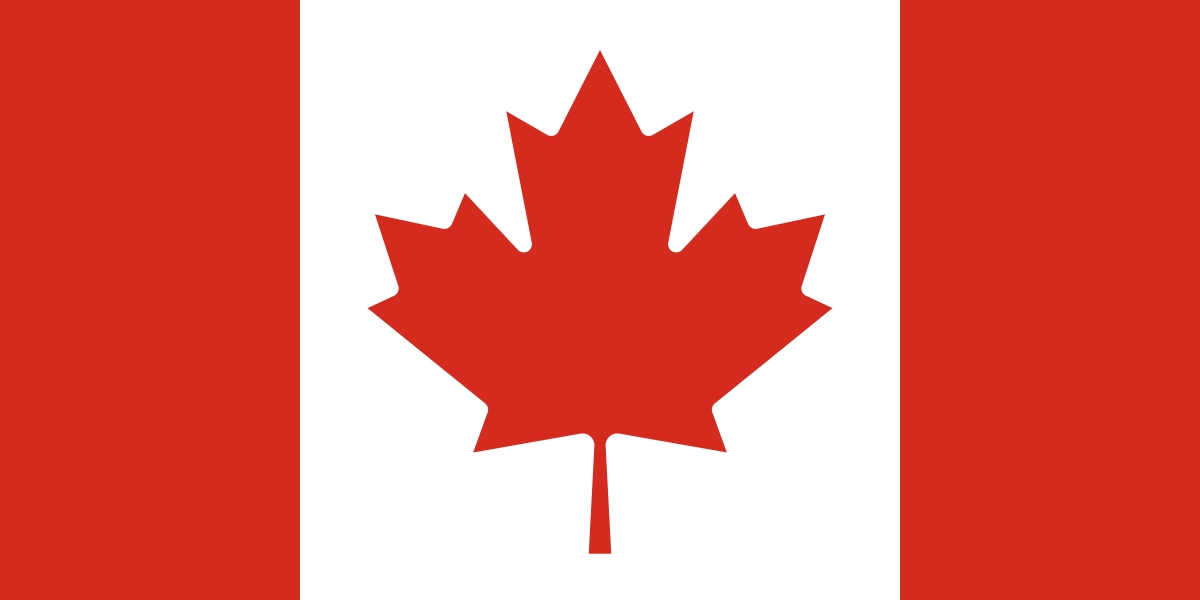
Canada's maple leaf flag is younger than most Canadians assume. It was adopted on 15 February 1965 after one of the most contentious parliamentary debates in Canadian history — the Great Canadian Flag Debate ran for 37 sitting days. The previous flag, the Canadian Red Ensign, featured the Union Jack and a coat of arms.
The final design by George Stanley places an 11-pointed red maple leaf centred on a white square (called the Canadian pale), flanked by two red vertical bars. The proportions are 1:2. The specific shade of red is Pantone 032 (called "Flag Red"). The number of points on the leaf — 11 — was determined by wind tunnel testing at the National Research Council. Designs with more points became blurred at a distance; 11 points provided the clearest silhouette in motion.
The maple leaf had no political or partisan association before 1965, which was precisely why it worked. It belonged to no province, no party, no ethnic group. That deliberate neutrality made it one of the most successful flag redesigns of the 20th century. It is now one of the most tattooed national symbols worldwide, second only to the American flag.
8. Nepal
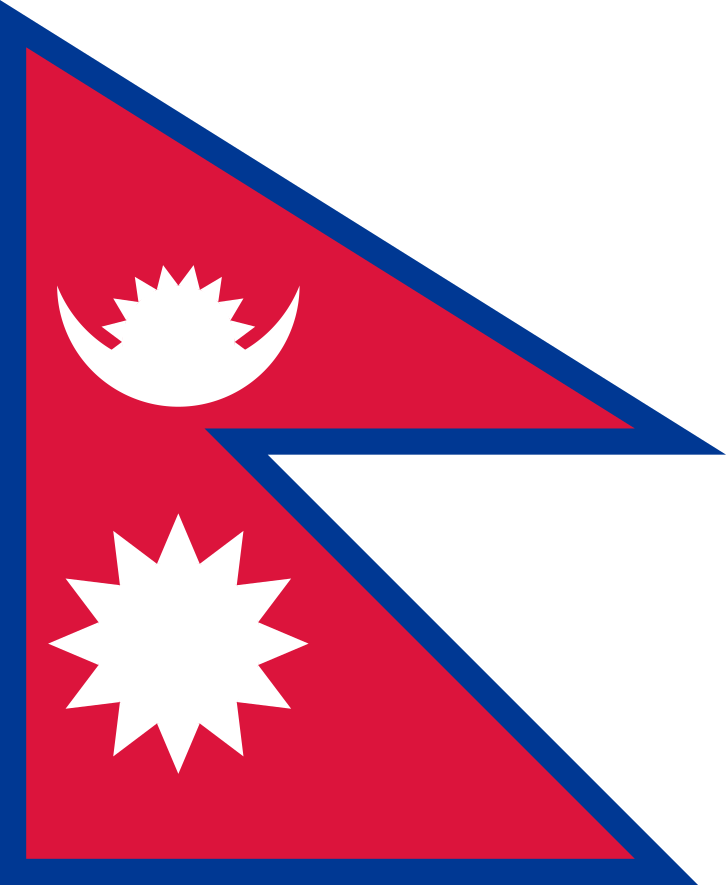
Nepal's flag is the only national flag in the world that is not rectangular (or square). It consists of two stacked triangular pennants, crimson red with blue borders. The upper triangle contains a white moon with eight visible rays and a crescent. The lower triangle contains a twelve-rayed white sun.
The flag's construction is mathematically precise and remarkably complex. Article 5, Schedule 1 of Nepal's 2015 constitution contains a 24-step geometric construction method — the only national flag whose exact proportions are defined by a constitutional algorithm rather than a simple ratio. The height-to-width ratio works out to approximately 1:1.2189 (the exact value involves irrational numbers from the geometric construction).
The two pennants historically represented the Hindu and Buddhist traditions of Nepal, or the Rana and Shah royal dynasties. The sun and moon symbolise the hope that Nepal will endure as long as those celestial bodies. The crimson red is Nepal's national colour, associated with the rhododendron (the national flower). The blue border represents peace.
9. India
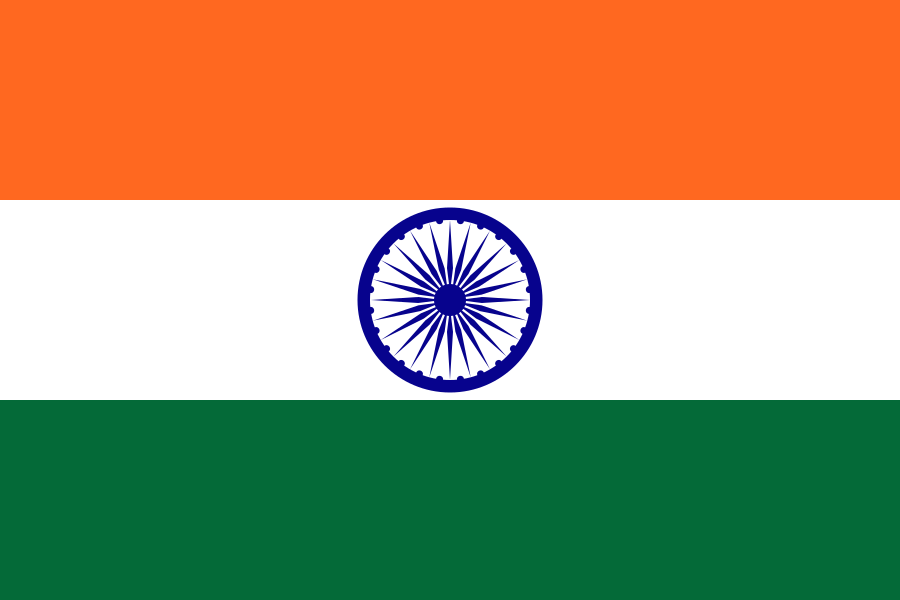
Three horizontal stripes — saffron on top, white in the middle, green on the bottom — with a navy blue 24-spoke wheel (the Ashoka Chakra) centred on the white stripe. The flag was adopted on 22 July 1947, three weeks before independence from Britain.
The original design by Pingali Venkayya included a spinning wheel (charkha), representing Mahatma Gandhi's self-reliance movement. The Constituent Assembly replaced it with the Ashoka Chakra — the Wheel of Law from the Lion Capital of Ashoka at Sarnath, a 3rd-century BCE Buddhist monument. The 24 spokes represent the 24 hours of the day, symbolising continuous progress.
The flag must be made from khadi, a hand-spun cloth associated with the independence movement. This is not symbolic — it is legally enforced under the Flag Code of India (2002). Synthetic or machine-made flags were illegal for private citizens until 2002, when the Supreme Court ruled in Union of India v. Naveen Jindal that flying the flag is a fundamental right under Article 19(1)(a). The Bureau of Indian Standards specification IS 1 governs every detail down to thread count and colour fastness.
Browse businesses across the region in our Asia directory.
10. South Korea
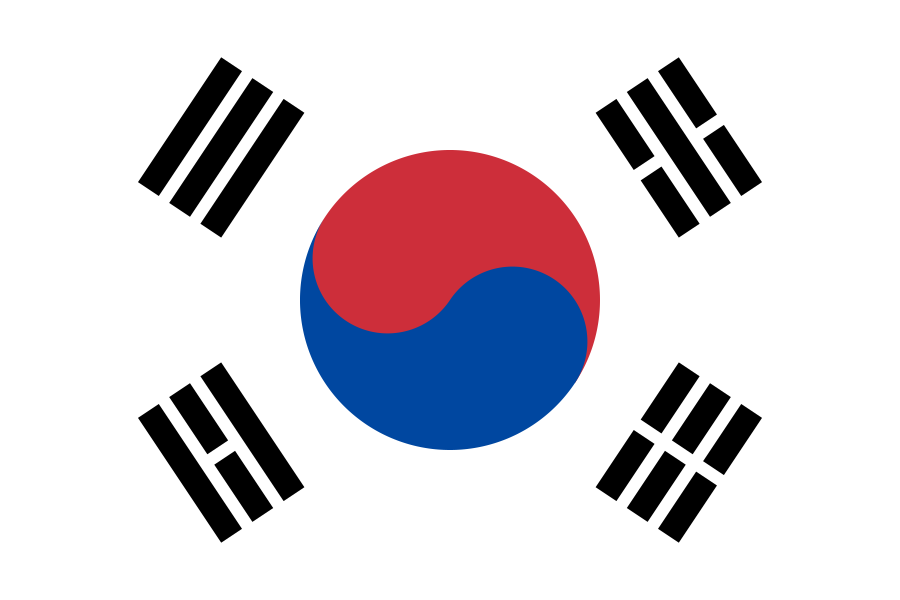
The South Korean flag, the Taegukgi, is one of the most philosophically loaded national flags in existence. A white field (representing peace and purity) holds a red-and-blue taeguk (yin-yang circle) at its centre, surrounded by four black trigrams from the I Ching (Book of Changes) at the corners.
The four trigrams represent: heaven (top-left, three unbroken lines), earth (bottom-right, three broken lines), water (top-right, broken-unbroken-broken), and fire (bottom-left, unbroken-broken-unbroken). Together they represent the fundamental forces of the universe in Korean and Chinese cosmology. The taeguk itself represents the balance of opposing cosmic forces — similar to yin-yang but with a distinctly Korean interpretation emphasising perpetual movement rather than static balance.
The current design was standardised in 1949 after Korean independence, though taeguk-based flags were used during the late Joseon dynasty from the 1880s. The flag's proportions are 2:3. South Koreans refer to the flag with deep formality — it is raised and lowered with specific protocols, and Flag Day (March 1) is one of five national flag-display days.
Which National Flags Are the Most Complex?
Turkmenistan holds the record. Its flag includes a vertical carpet strip on the hoist side containing five carpet gul designs, each representing one of the country's major tribal groups. The guls are rendered in precise detail — the flag specification runs to multiple pages of pattern geometry. Below the guls sits an olive branch wreath added in 1997 to mark Turkmenistan's neutrality policy.
Belize competes for complexity. Its flag features a full coat of arms: a mahogany tree, a shield divided into three sections (a paddle and squaring axe, a saw and axe, a sailing ship), two woodcutters (one of European descent, one of African descent), a wreath of 50 leaves, and a scroll reading SUB UMBRA FLOREO ("Under the shade I flourish"). Reproducing it accurately on fabric is notoriously difficult.
At the opposite extreme, Libya between 1977 and 2011 flew a plain green rectangle — no symbols, no text, no additional colours. It was the simplest national flag in modern history. After Gaddafi's fall in 2011, Libya reverted to its pre-1969 tricolour with a crescent and star.
Join the DirJournal newsletter
Weekly insights on directories, listings, SEO, and how businesses get found online.
No spam. Unsubscribe anytime.
Found this useful?
Share this article
Recommended for You

The Top 5 Last-Minute Mother's Day Gifts for 2026
Forgot Mother's Day is this Sunday? Five last-minute gift ideas for 2026, from a $0 breakfast in…
The Most Beautiful Places in the World (2026)

Electricians Score as High as UI/UX Design Agencies in AI Search. Here's Why.
Electricians scored 50/100 in our AI Citation Study. UI/UX Design Agencies scored 56. Six points…
Related Resources
Looking for verified service providers? Browse our directory categories below — all human-audited and trusted by decision-makers since 2007.