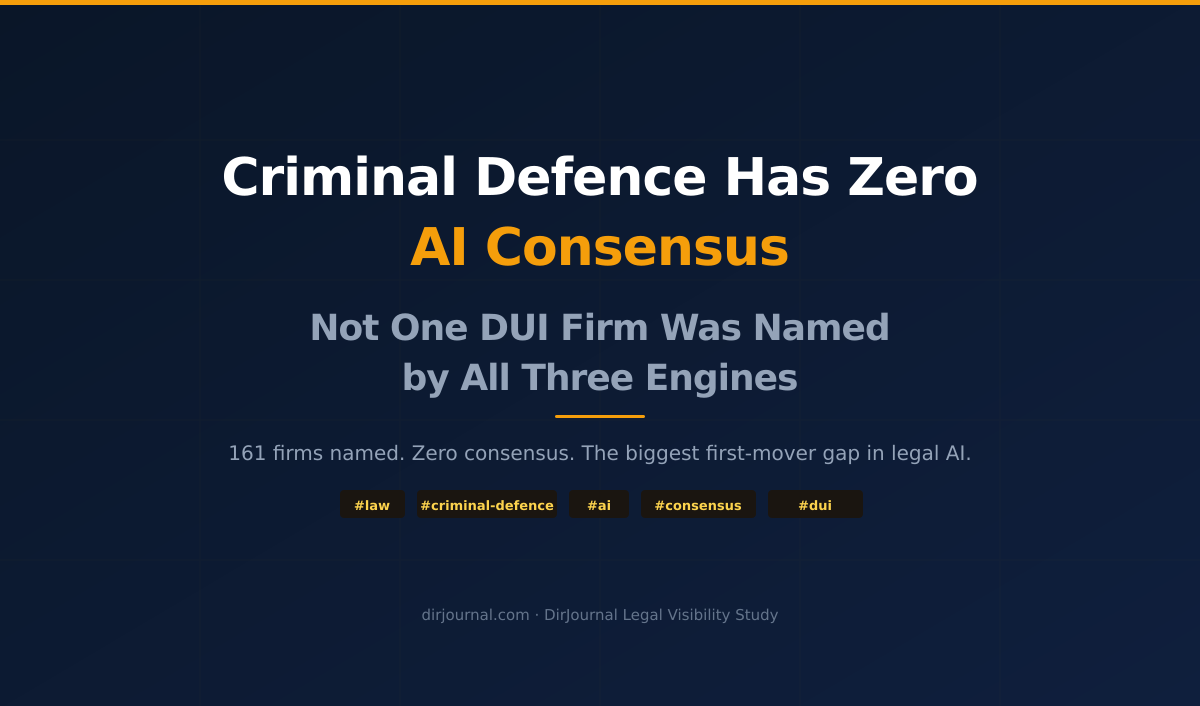
Criminal Defense Has Zero AI Consensus. Not One DUI Firm Was Named by All Three Engines.
183 criminal defense firms named across 60 queries. Zero named by all three engines. The only legal specialty where AI can't converge on a single firm.
Founder, DirJournal
72 articles on DirJournal · Writing on DirJournal since 2007
Founder of DirJournal and a serial web entrepreneur building business directories, AI-driven discovery products, and SaaS since 2007. Contributor at Forbes, Entrepreneur, Fast Company, and Benzinga.

183 criminal defense firms named across 60 queries. Zero named by all three engines. The only legal specialty where AI can't converge on a single firm.

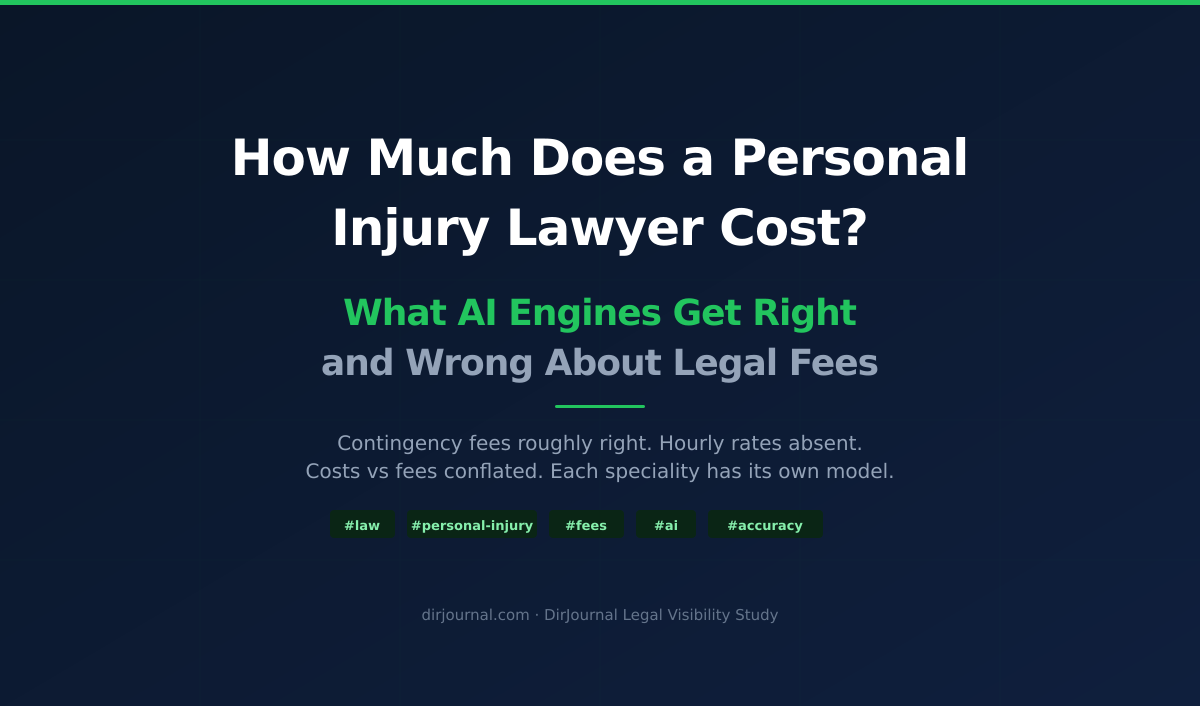
AI accurately maps contingency to PI, retainers to family law, hourly to corporate. But it cites 40% ten times more often than 33% — skewing the PI fee range high.

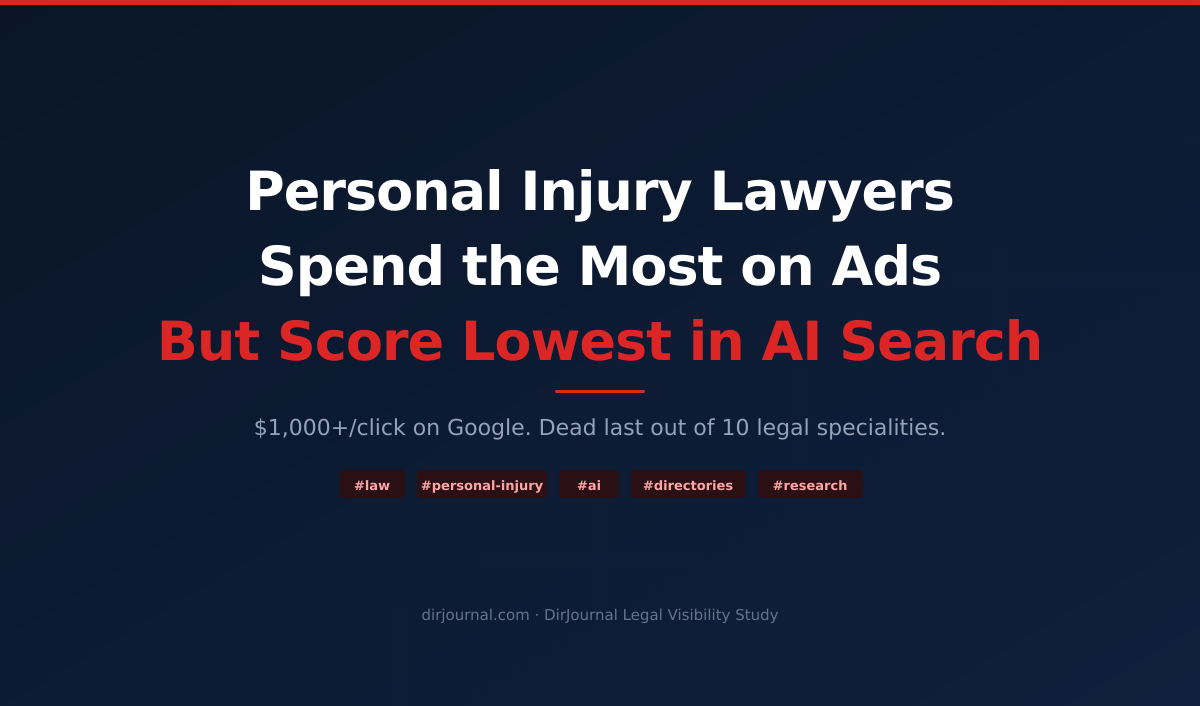
Personal Injury scored 71. Estate Planning scored 81. The legal specialty with the highest Google Ads spend ranked dead last in AI search visibility.

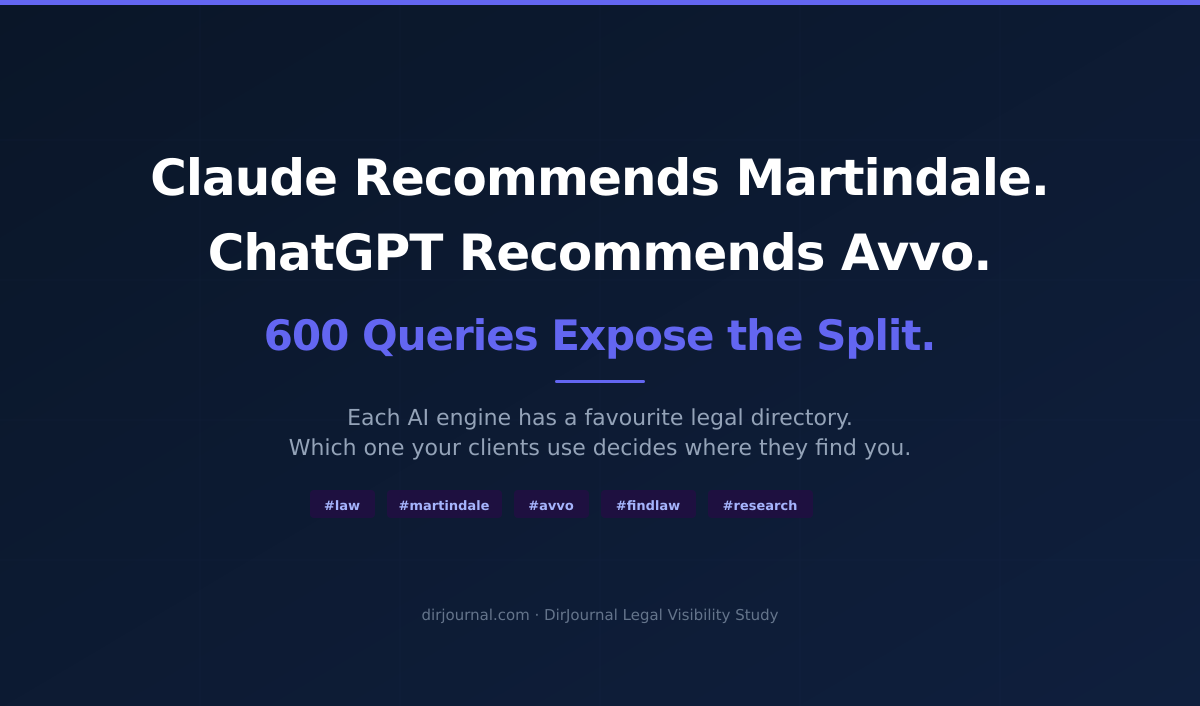
Claude cited Martindale 141 times. ChatGPT cited Avvo 79 times. Perplexity cited Super Lawyers 81 times. Each AI engine trusts a different legal directory.

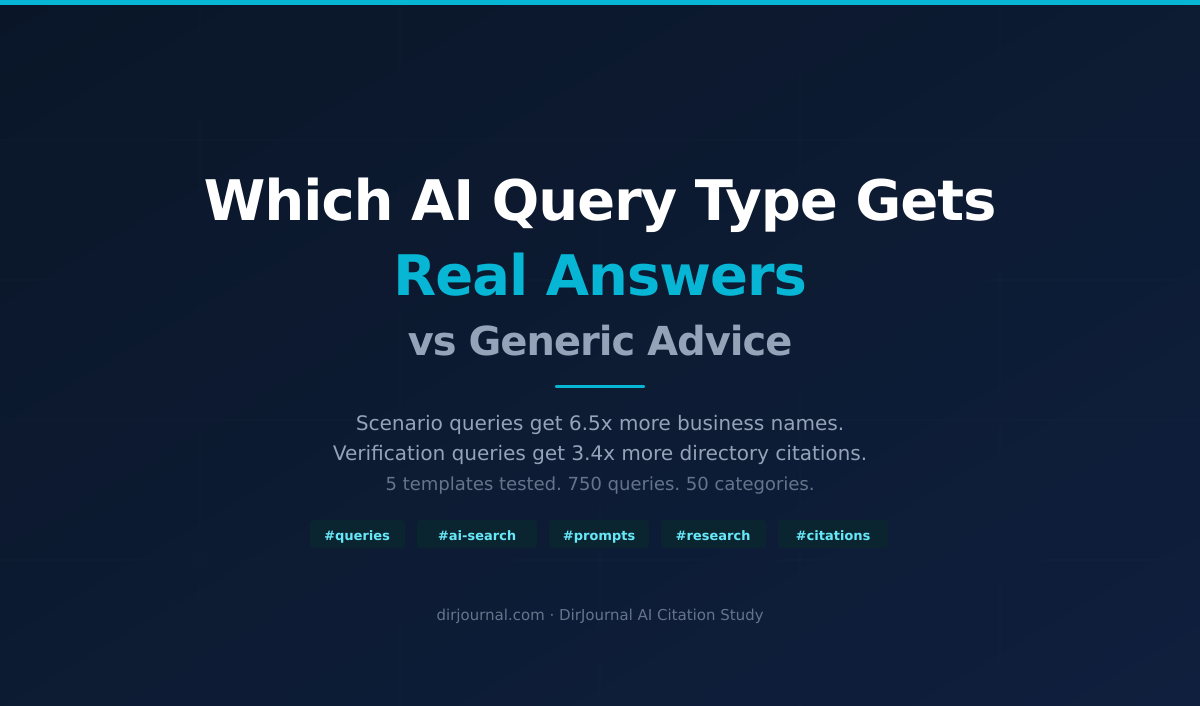
Scenario-based AI queries produce 6.5x more business names than comparison queries. Verification queries produce 3.4x more directory citations than any other template. Location queries produce ChatGPT's strongest results (5.9 entities per response). Data from 750 queries across 50 categories.

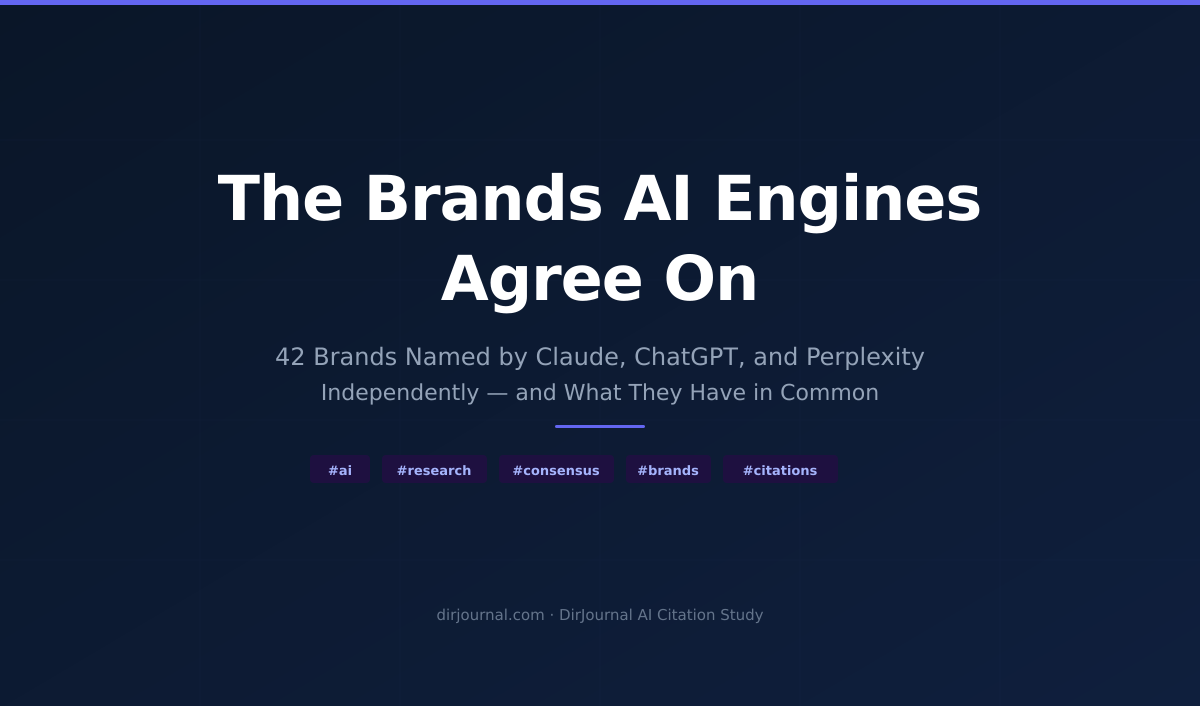
42 brands were named by Claude, ChatGPT, and Perplexity independently across 750 queries. Same prompt, three different training datasets, converged on the same businesses. Two traits appear in every consensus brand: market leadership (#1 or #2 by revenue in their category) and consistent structured data across multiple third-party platforms.

Management Consulting scored 49 in our AI Citation Study. Addiction Treatment scored 36 — the lowest of any category tested. Three of the bottom five are healthcare. The reason: minimal public directory presence, regulatory advertising restrictions, and stigma-driven privacy that suppresses the review corpus AI engines rely on.

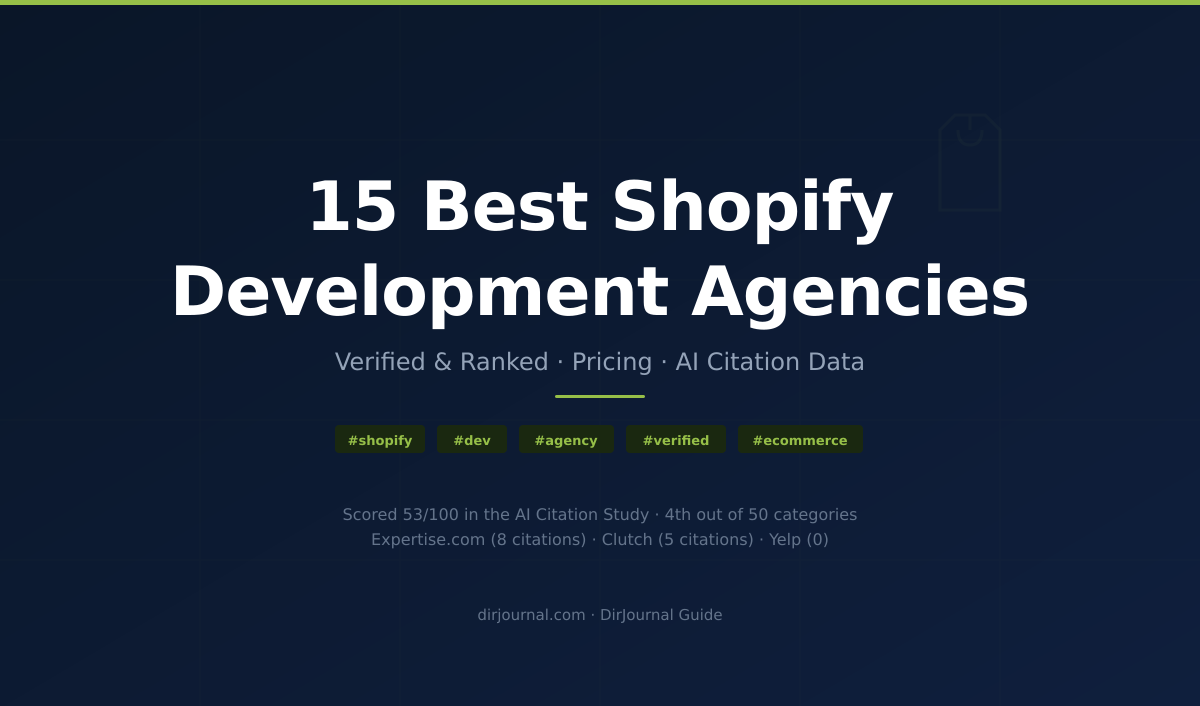
Shopify Development Agencies scored 53 out of 100 in our AI Citation Study, ranking 4th out of 50 categories. This roundup covers 15 agencies verified through directory presence, client portfolios, and Shopify Partner status — with pricing ranges, best-fit use cases, and links to their DirJournal listings.

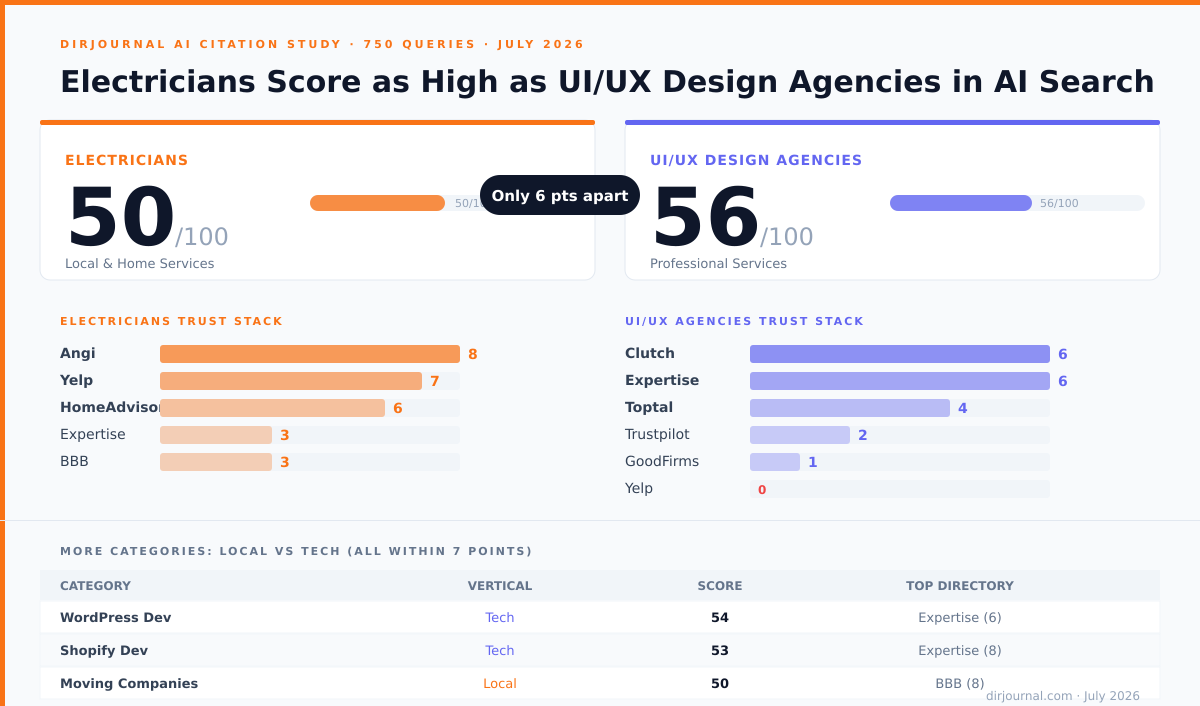
Electricians scored 50/100 in our AI Citation Study. UI/UX Design Agencies scored 56. Six points separate a licensed electrician from a design agency that shaped Google's interface. The mechanism is identical: AI engines verify businesses through directory profiles. Only the directories differ by vertical.

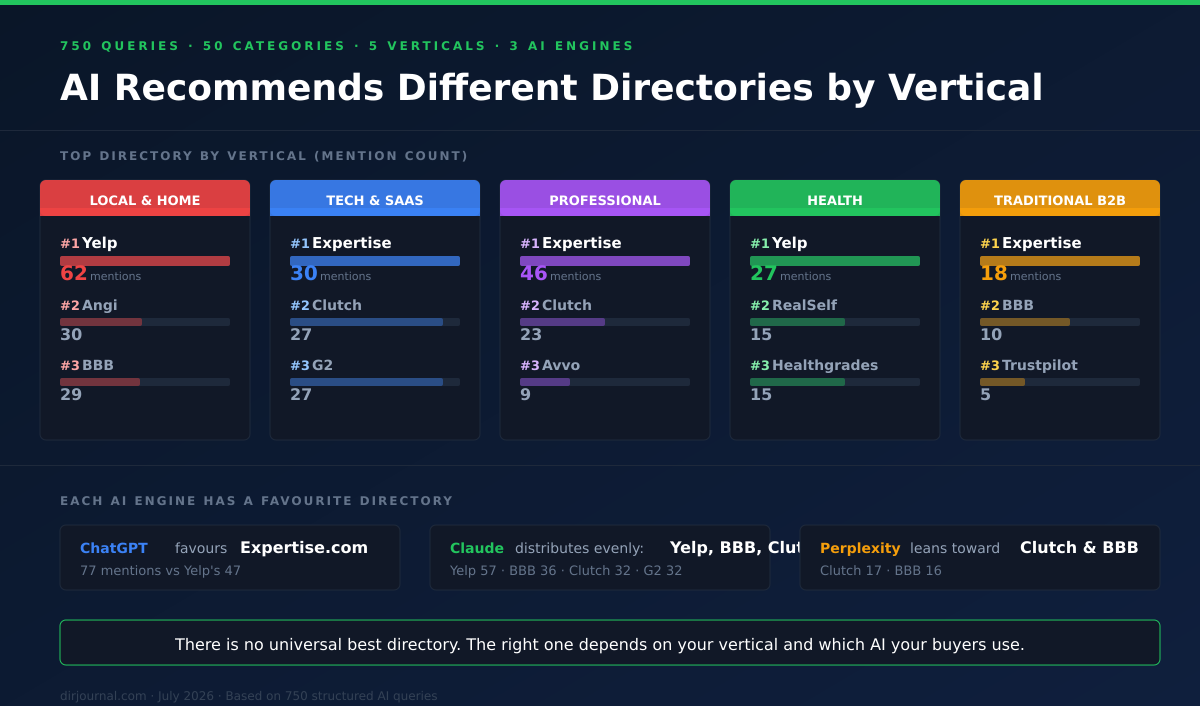
Ask an AI engine how to find a trustworthy plumber and it tells you to check Yelp. Ask about a Shopify agency and it says Clutch. Ask about a cosmetic surgeon and it says RealSelf. The data from 750 AI queries across 50 categories reveals a clear pattern: there is no universal best directory, and businesses on the wrong one for their vertical are invisible to AI search.

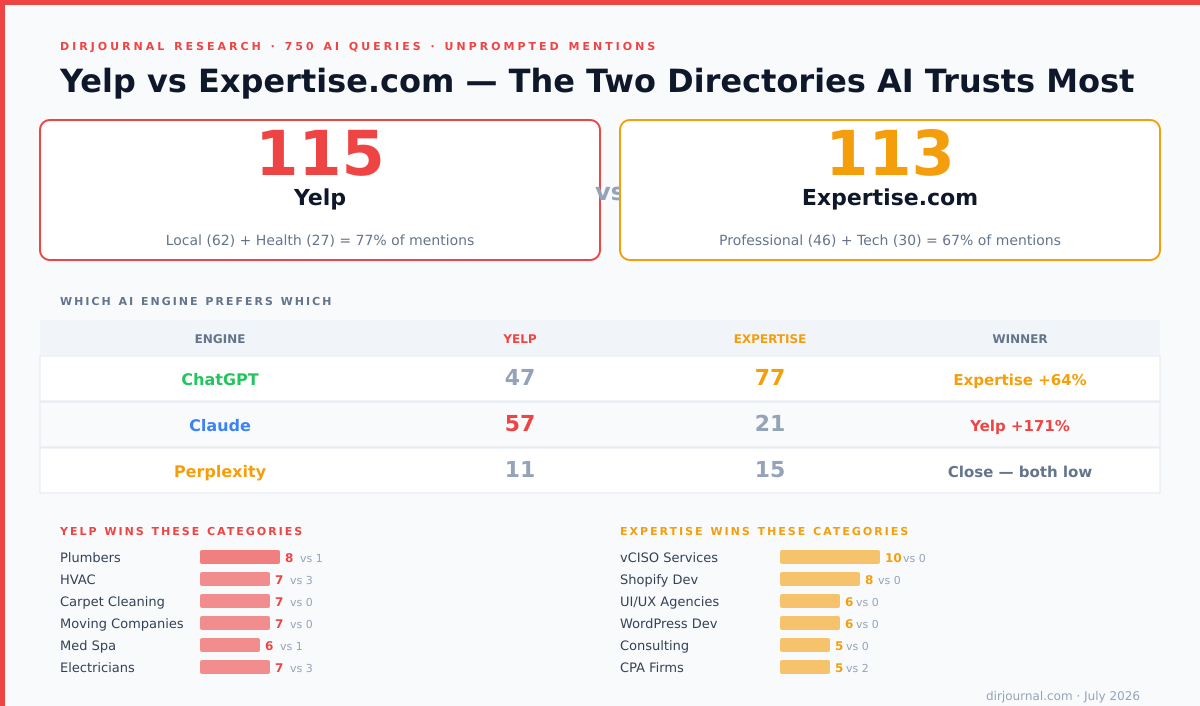
Yelp got 115 AI mentions across 750 queries. Expertise.com got 113. They're nearly tied overall but dominate completely different verticals: Yelp owns local and healthcare, Expertise owns tech and professional services. Which one matters for your business also depends on which AI engine your buyers use — ChatGPT mentions Expertise 77 times, Claude prefers Yelp 57 times.

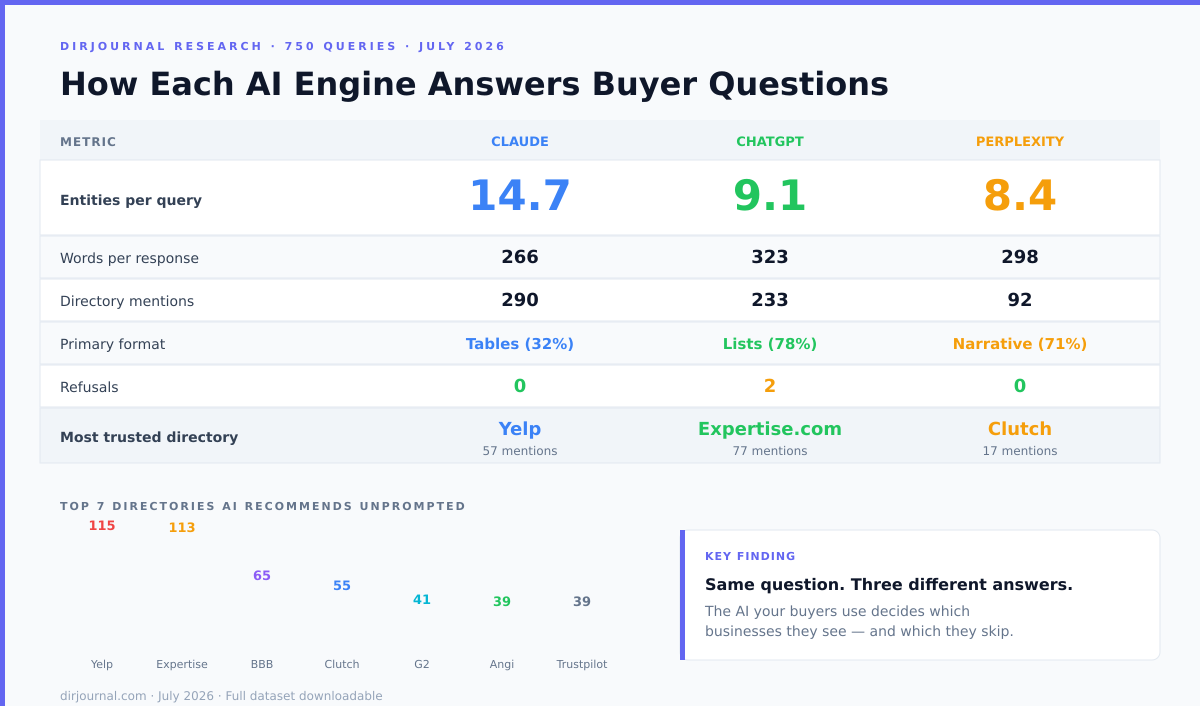
Claude writes comparison tables and names 14.7 businesses per query. ChatGPT writes numbered lists and names 9.1. Perplexity cites sources and names 8.4. Same question, three completely different answers — and the AI engine your buyers use determines the format, the directories cited, and even whether specific providers get named at all.

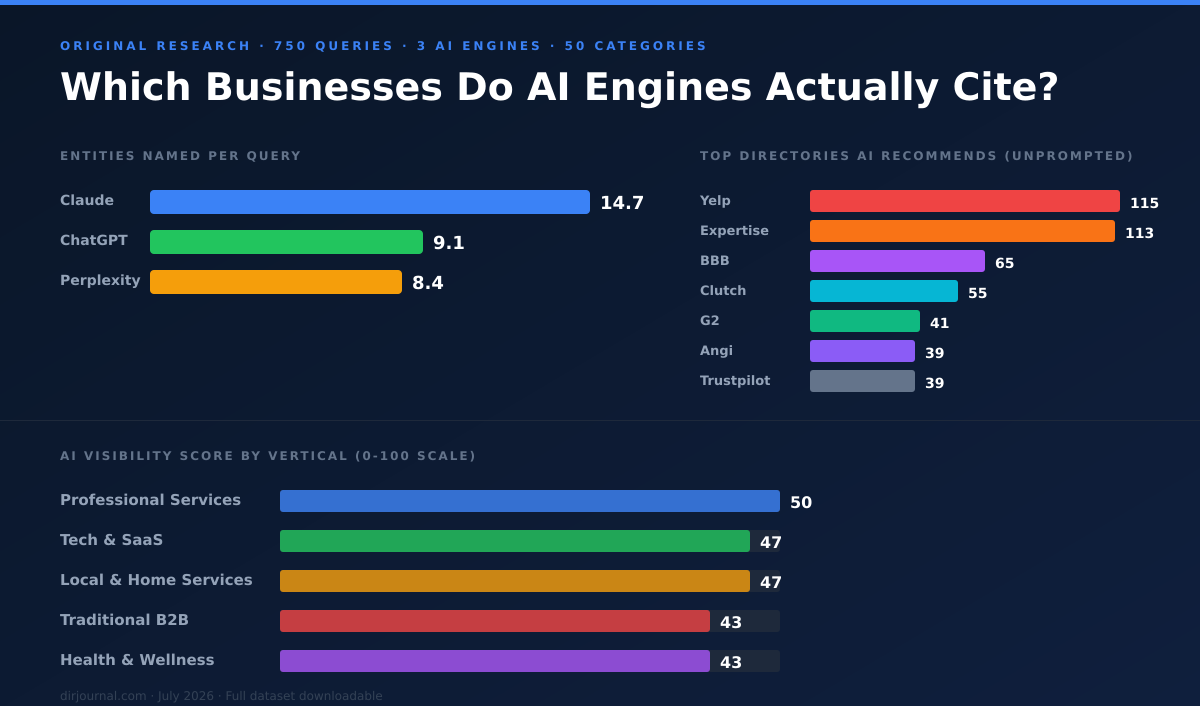
Claude names 14.7 businesses per query. ChatGPT names 9.1. Perplexity names 8.4. Original DirJournal research across 750 structured queries and 50 commercial categories reveals which brands, directories, and verticals AI engines actually cite when buyers ask, plus the full downloadable dataset.

Query fan-out is a retrieval technique where an AI search system breaks a single prompt into multiple sub-queries, runs them in parallel, and merges the retrieved results into one synthesized answer. Your page can earn a citation for a sub-query the user never typed and you never targeted. This guide covers how it works, and then shows how to extract the actual fan-out queries yourself, for free, and what to do with them.

Optimizing for individual AI engines is a trap because their rules change weekly. Here is the Platform Agnostic Entity Strategy that wins citations from ChatGPT, Gemini, Perplexity, and Google AI Overviews at the same time.

Source Mention Overlap has replaced Domain Authority as the metric AI engines use to decide which businesses to cite. Here is how Entity Corroboration works and why human-curated directories now own the verification loop.

Why AI engines like Google AI Overviews, ChatGPT, and Perplexity prioritize human-curated directories over backlinks — and how to turn that into AI Visibility for your business.

Claude connectors are prebuilt, hosted integrations that link Claude to outside services like Gmail, GitHub, Linear, and Slack. Each connector runs on the open Model Context Protocol; you authenticate once and Claude inherits your existing permissions in that service. Anthropic's directory listed 369 entries across 11 categories as of June 19, 2026, up from around 50 at the start of the year.

The old formula of citations plus reviews plus proximity is breaking. AI agents now select one business instead of listing ten. Here is what local businesses need to do differently.

Kinesthetic learning is the idea that some people learn best through movement. The popular version is not supported by evidence; the underlying mechanisms are. Here is the research, the numbers, and the study techniques that actually work.